Engineered to extreme tolerances. Certified systems built for global test compliance and industrial validation.
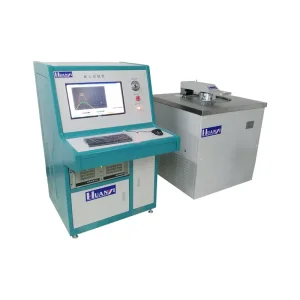
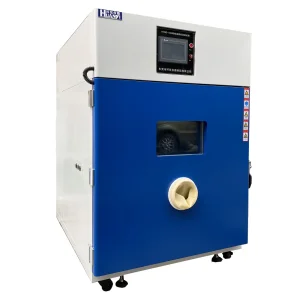
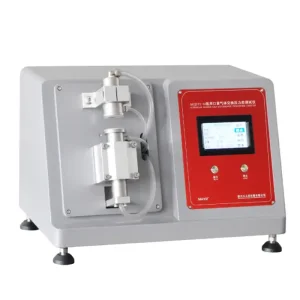
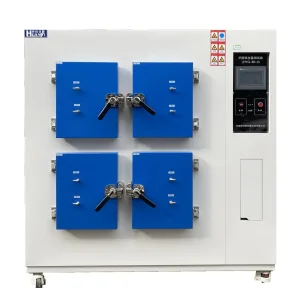
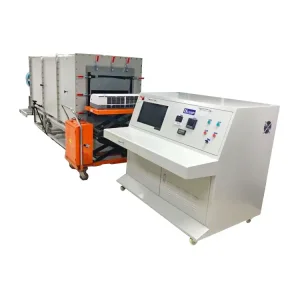
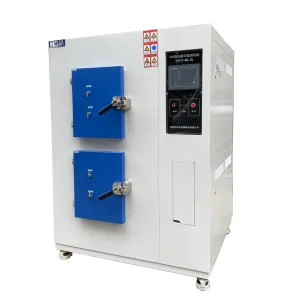
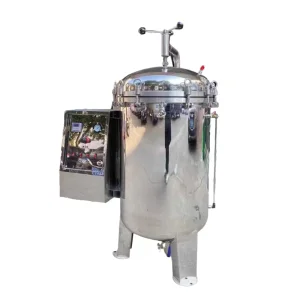
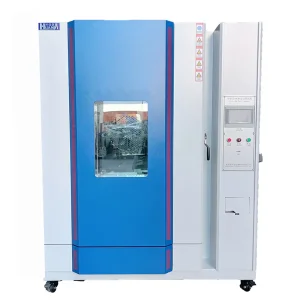
Understanding precision thermal technology, forced air convection mechanisms, and systemic engineering compliance for modern laboratory setups.
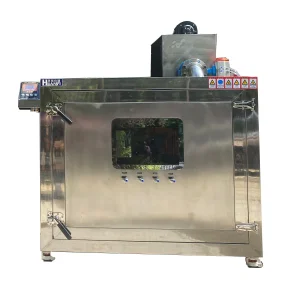
In modern scientific research and high-precision manufacturing, thermal processing is a foundational element. A Lab Hot Air Oven—alternatively recognized as a laboratory convection oven or laboratory forced-air dryer—is not merely a heated enclosure. It is a highly optimized environmental simulation chamber designed to perform sterilization, aging tests, curing, conditioning, and moisture extraction across tight tolerance limits.
For global enterprises, procuring from an established Lab Hot Air Oven manufacturer requires assessing beyond physical parameters. Factors such as airflow velocity, thermal recovery time, spatial uniformity (complying with DIN 12880 standards), and electronic controls integrations (like PID microprocessors and programmable PLC controllers) govern the quality of the experimental outcomes and raw production integrity.
How advanced control systems, IoT integration, and energy conservation regulations are transforming lab ovens globally.
Modern hot air ovens utilize fuzzy-logic PID controllers and Solid State Relays (SSR) to keep temperature fluctuations under ±0.1°C. Advanced HMI touchscreens support multi-stage programming and profile scheduling.
Double-walled construction combined with high-grade centrifugal fans forces heated air horizontally and vertically. This guarantees uniform distribution of heat and minimizes standard thermal stratification.
By deploying ultra-dense rock wool and ceramic fiber insulation, modern factories lower outer shell temperatures to meet safety regulations while slashing electricity consumption by up to 35%.
In line with FDA 21 CFR Part 11 requirements, ovens now feature USB ports, RS485 interfaces, and Wi-Fi modules, enabling researchers to continuously log thermal histories and export CSV data sheets.
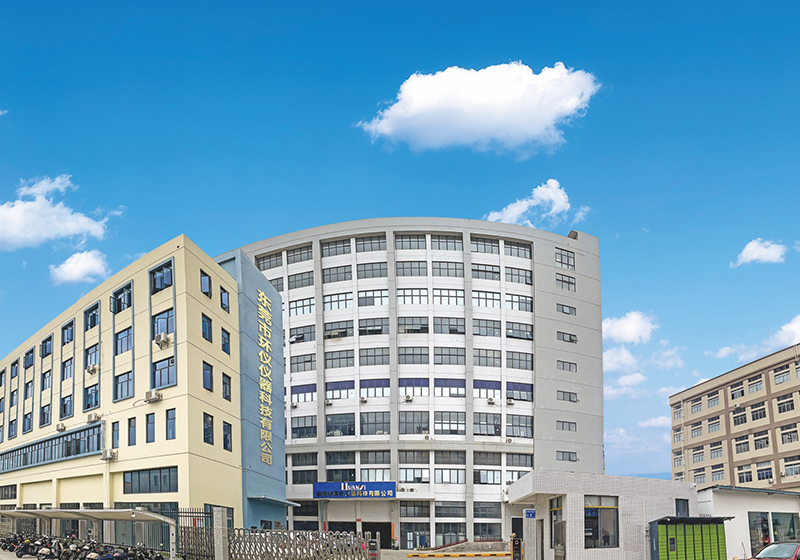
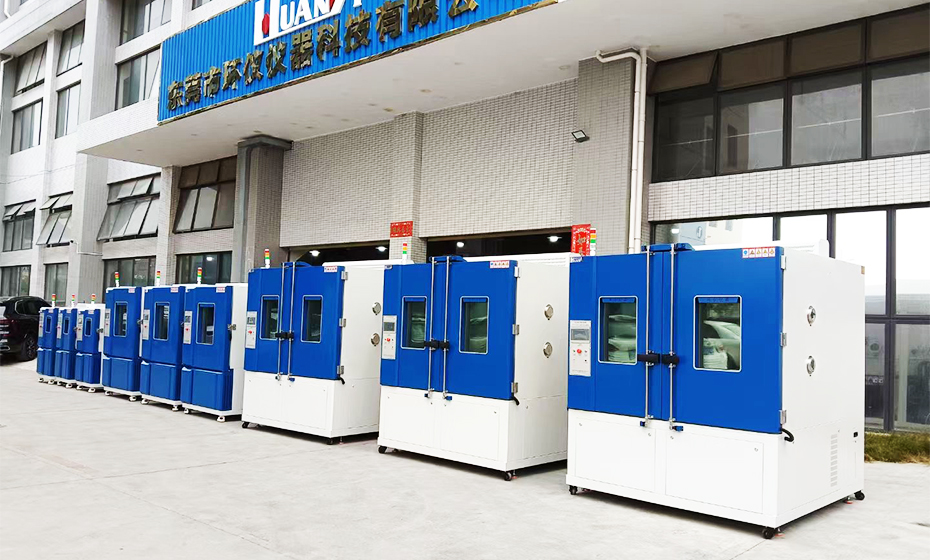
At Dongguan Huanyi Instruments Technology Co., Ltd., we understand that modern lab oven sourcing demands an interplay of high-volume efficiency and highly customized configurations. Spanning 6,022 square meters, our digital fabrication facility stands at the convergence of traditional mechanical integrity and Industry 4.0 methodologies.
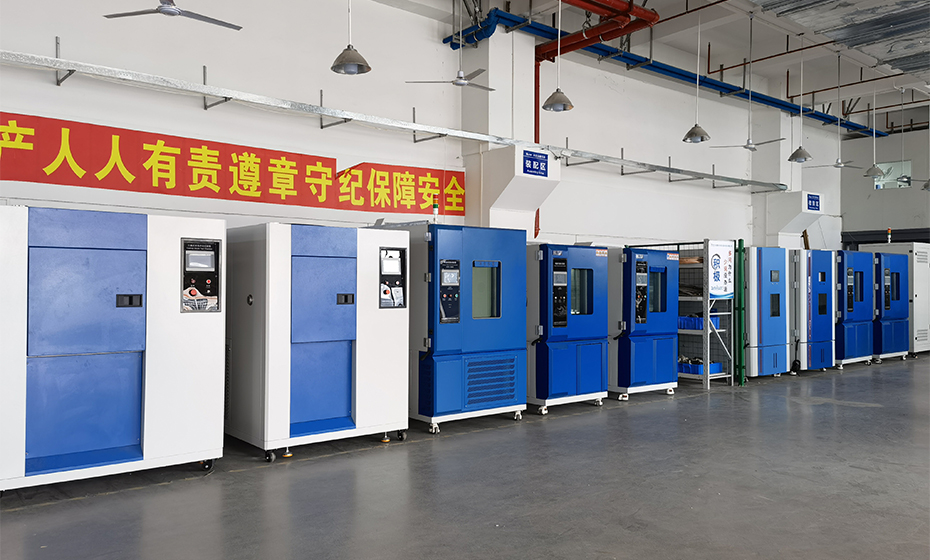
Our facility integrates advanced laser-cutting automation for sheet metal components, which minimizes structural tolerances to sub-millimeter scales. By managing every stage—from CAD prototype generation to computerized bending, robotic assembly, and digital painting—we reduce raw material waste, shorten delivery lead times, and guarantee repeatability across large production runs.
Moreover, our operation runs under a comprehensive ERP system. This allows us to trace components, track raw material supplies, schedule manufacturing stages, and record dynamic quality control logs. This structural cohesion gives international buyers full confidence in our supply-chain resilience, ensuring consistent lead times even under complex global procurement conditions.
Crucial parameters that procurement officers must evaluate to ensure equipment longevity, safety compliance, and operational ROI.
Always inspect the manufacturer’s DIN 12880 testing protocols. True laboratory hot air ovens present minimal deviation across 9 distinct measurement points inside the working chamber, eliminating hot or cold spots that could ruin tests.
Verify that the inner chamber uses SUS304 or SUS316L stainless steel. Chemical outgassing and moisture release at high temperatures require highly corrosion-resistant surfaces, preventing structural deterioration over decades of use.
Industrial operations mandate dual safety systems. A secondary independent temperature limiter (class 2 protection) acts as a hardware fail-safe, cutting heating power if the main controller experiences relay failures.
Established on March 20, 2007, Dongguan Huanyi Instruments is a recognized high-tech environmental testing developer.
Huanyi is not just a supplier; we actively participate in drafting national and industry standards for environmental simulation testing equipment (such as GB5364 and GBT50325), proving our technical authority.
Every step of our process—from incoming material inspection to finished-product calibration—is logged through our central ERP system to guarantee accountability.
Over 2,500 active customers worldwide trust Huanyi. Our environmental chambers, thermal ovens, and vibration tables are exported to Southeast Asia, Europe, North America, and the Middle East.
Our design and manufacturing systems are ISO 9001 certified. We source critical components from world-class brands to ensure exceptional operational stability.
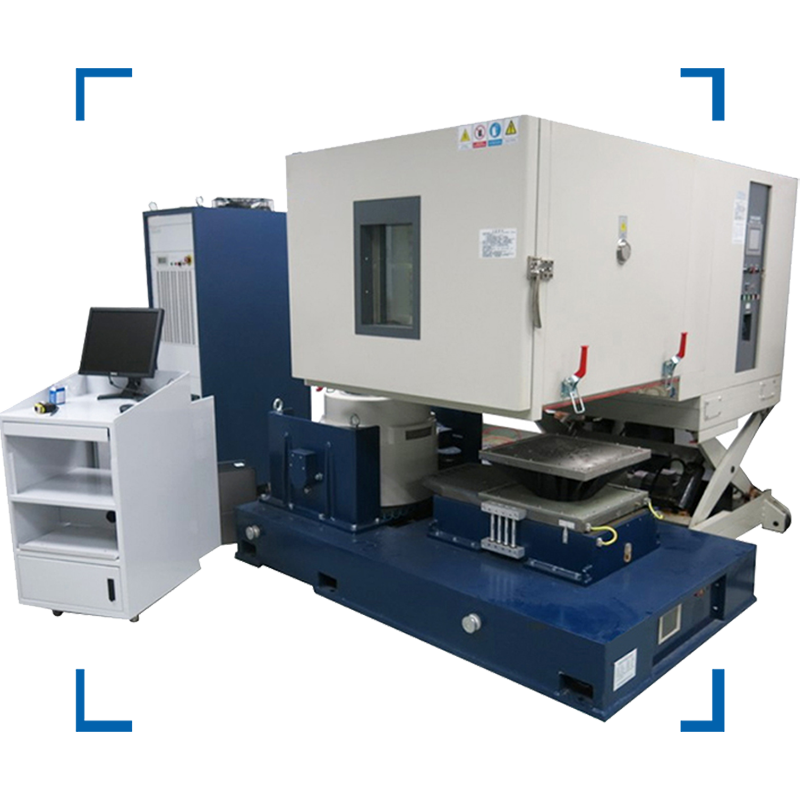
How our ovens and testing equipment are deployed across various industries, from electronics to biomedical engineering.
Thermal processing removes residual moisture from multi-layer substrates before soldering, preventing delamination and component cracking. Integrated nitrogen gas purging prevents copper oxidation during high-heat cycles.
Our systems support thermal aging tests of composite structural panels, cables, and battery components under prolonged thermal stress. Our design matches severe ISO, ASTM, and DIN protocols.
From sterilizing specialized glassware to curing biocompatible coatings on medical devices, our chambers deliver exact heat levels with no cross-contamination risk, satisfying cleanroom regulations.
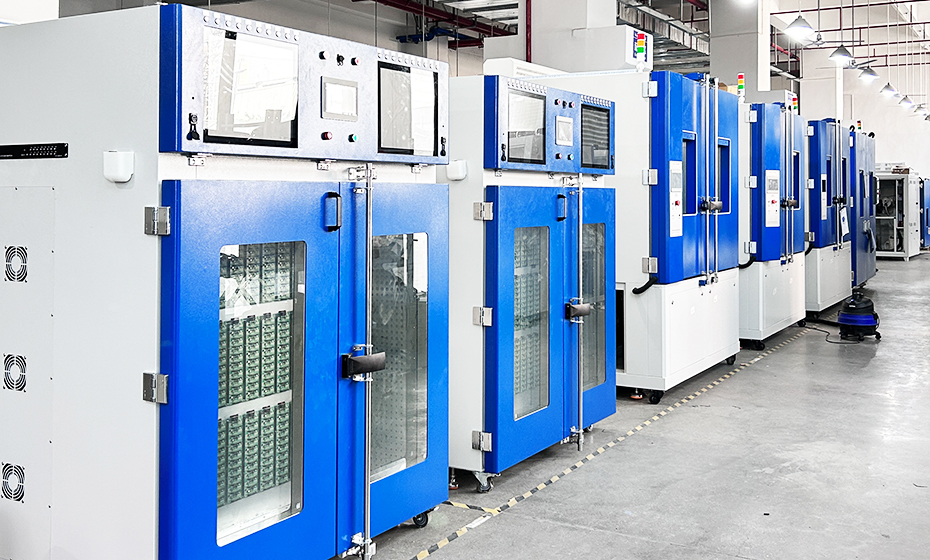
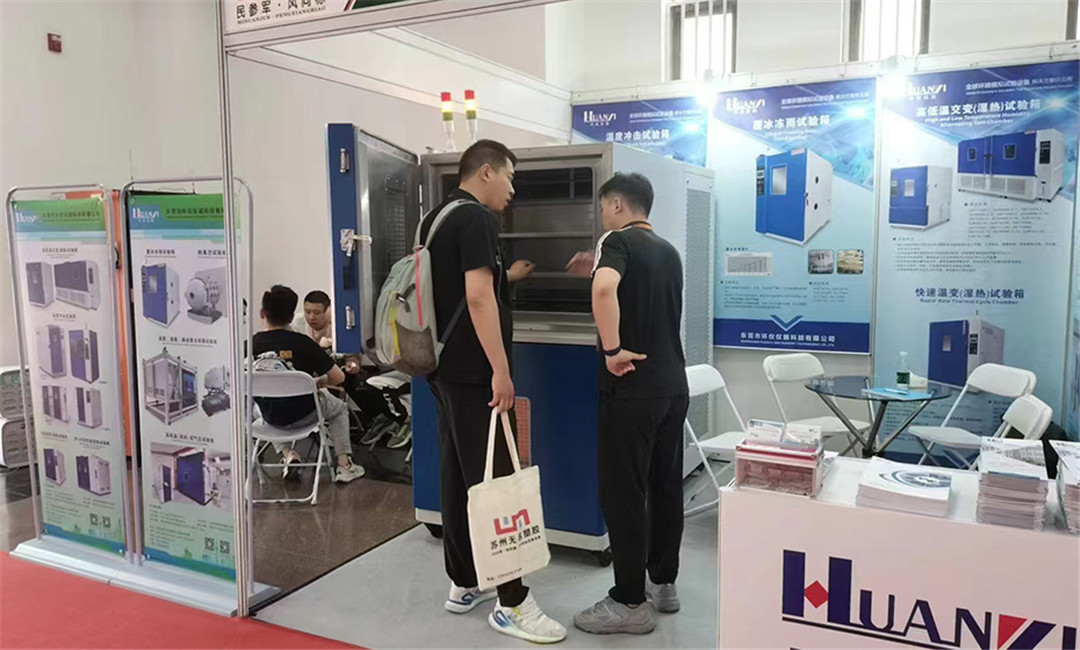
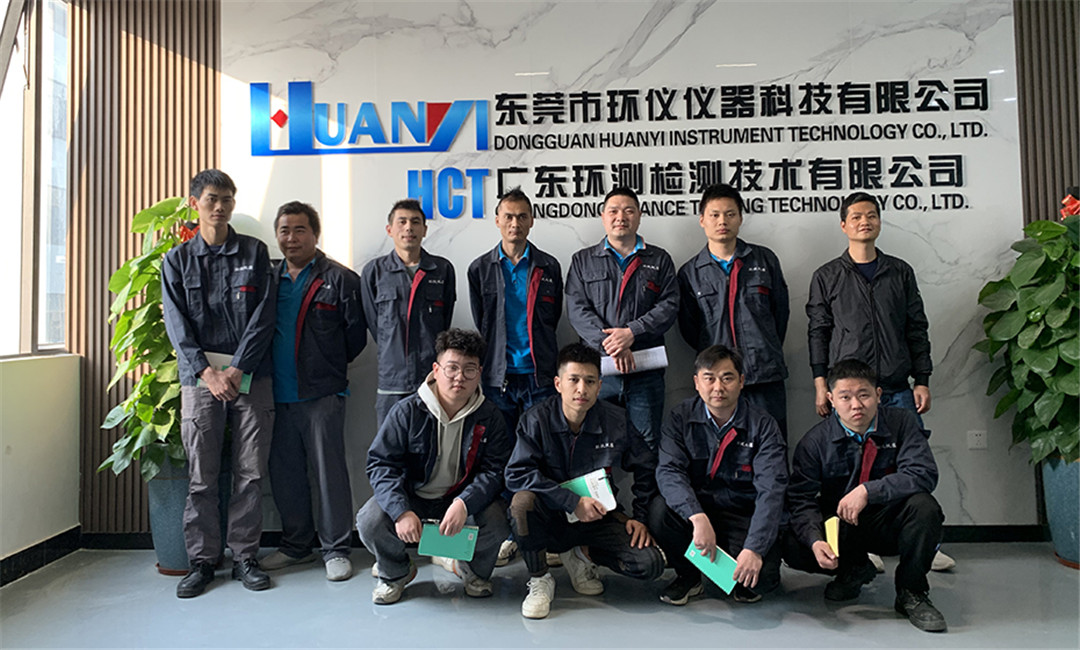
Take a visual tour through our manufacturing shopfloors, finished product libraries, and application cases.
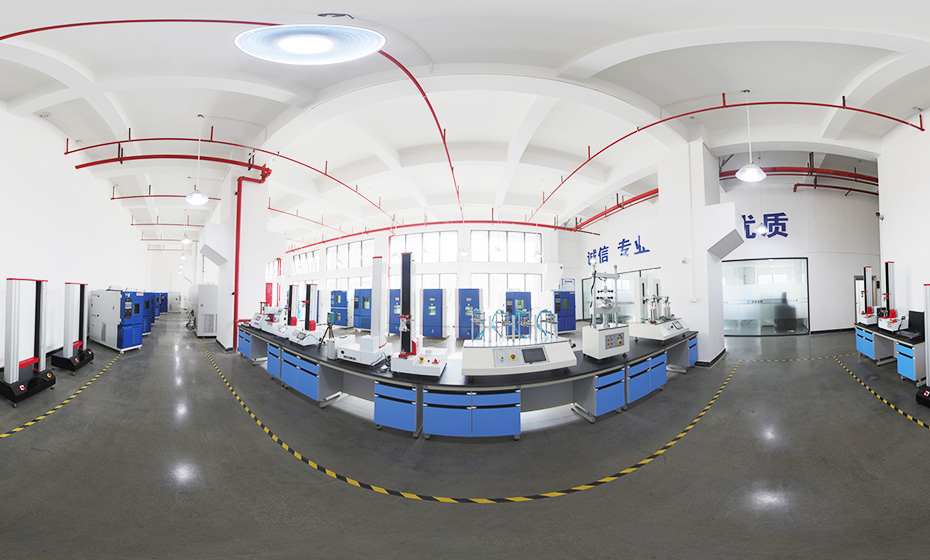
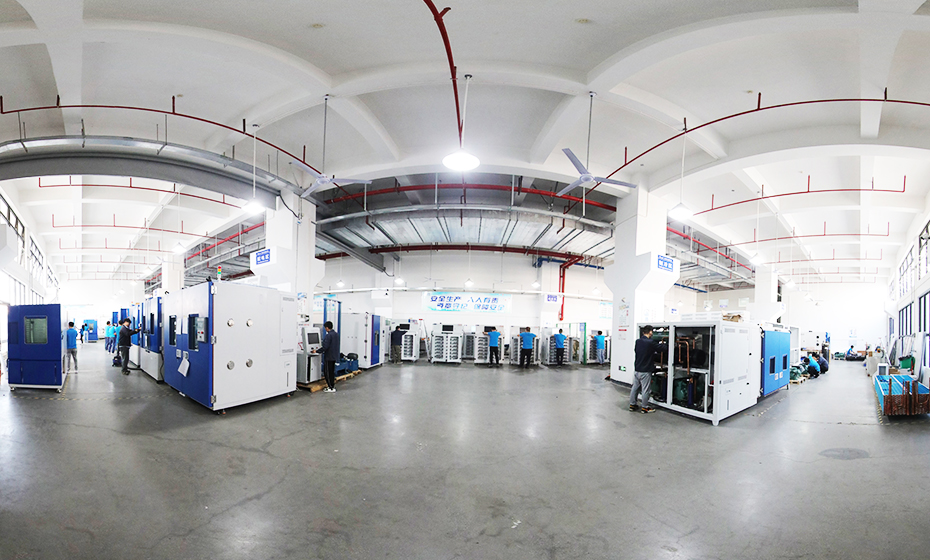
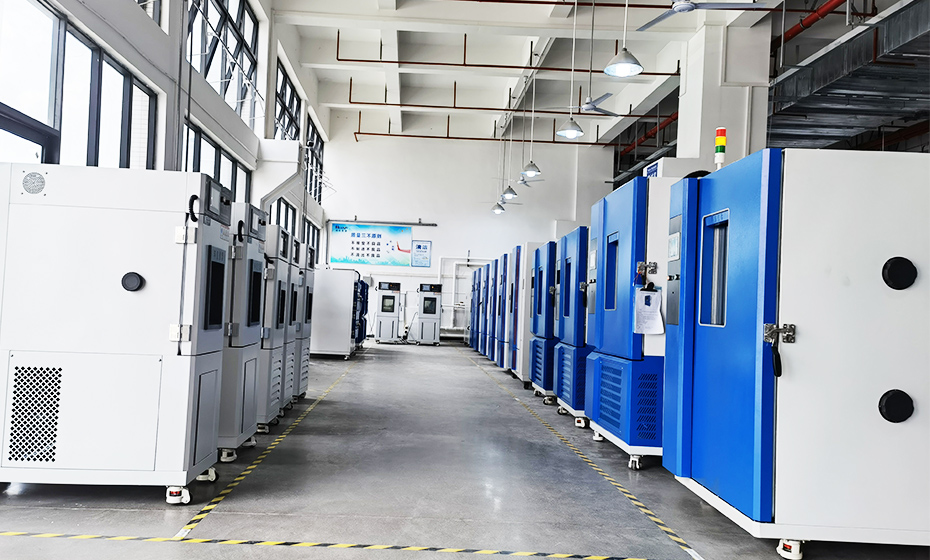

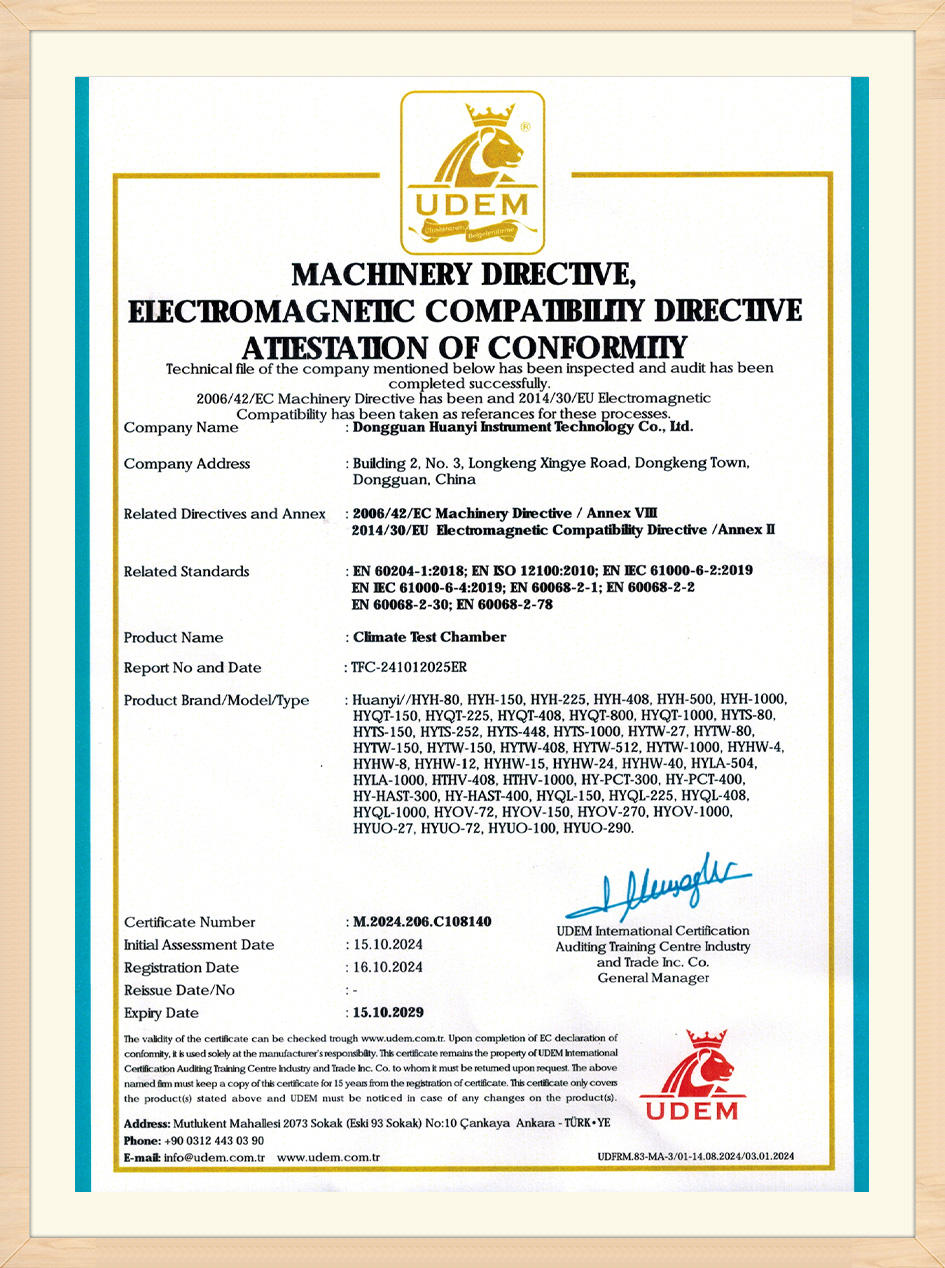
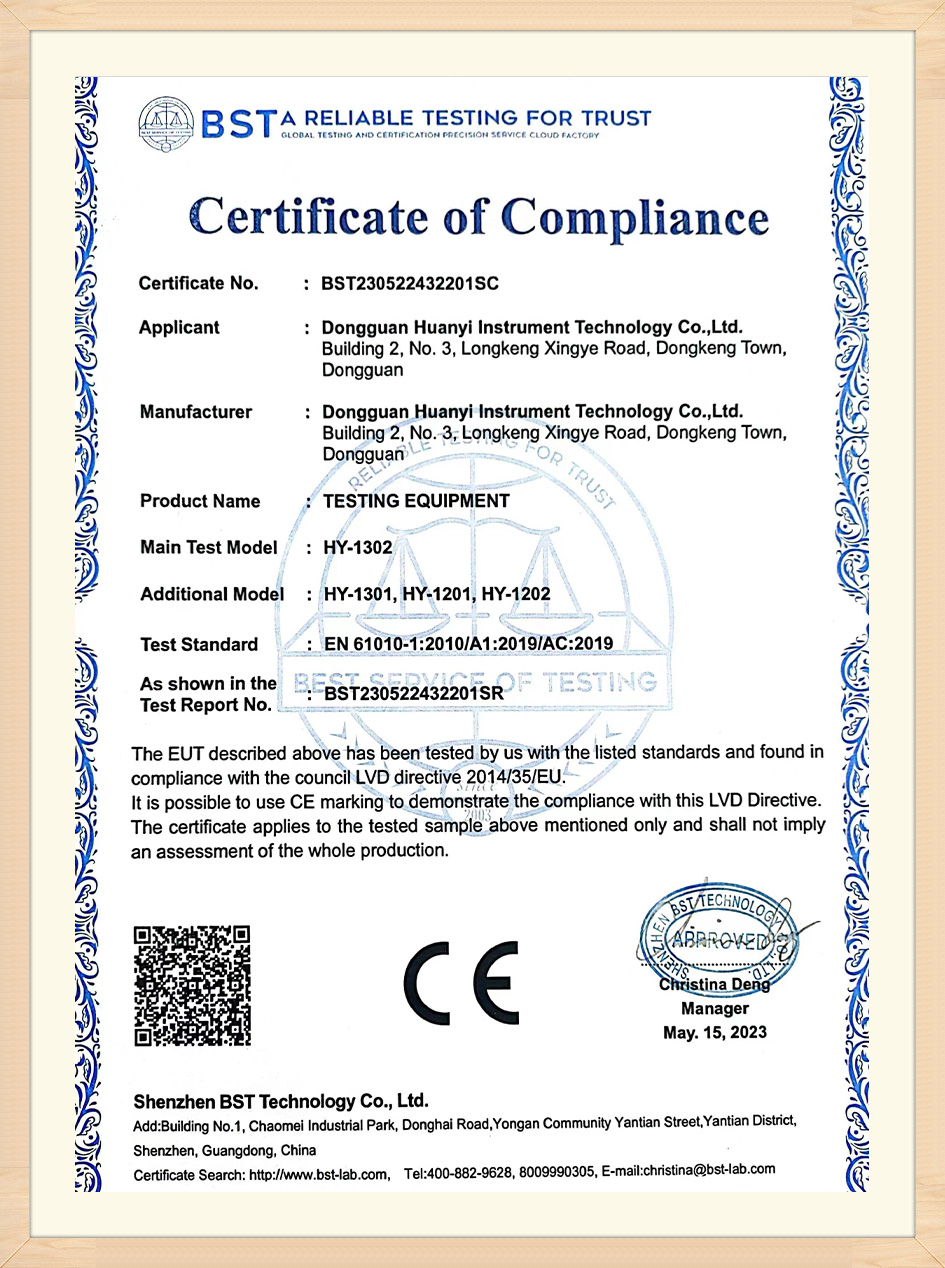
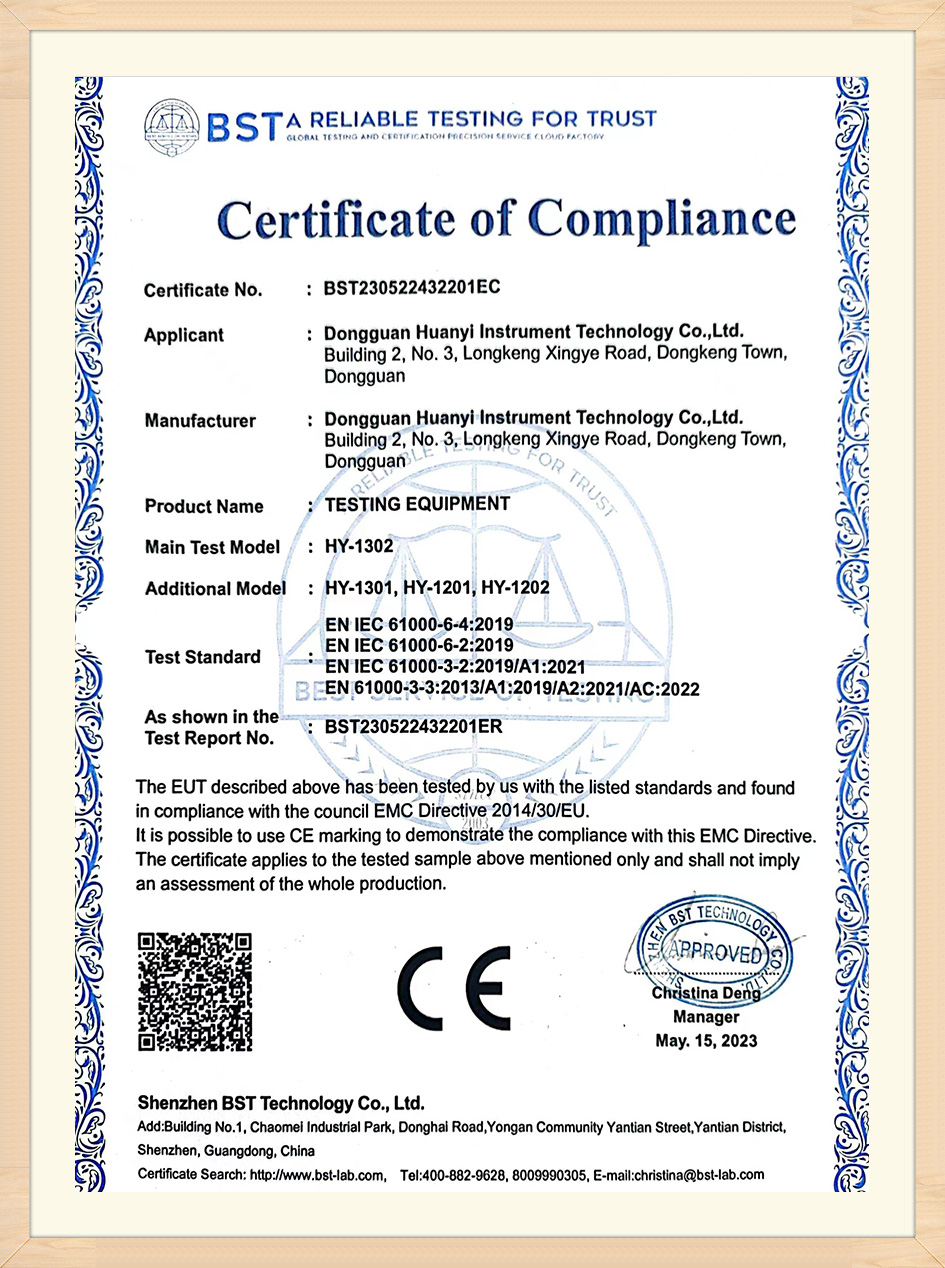
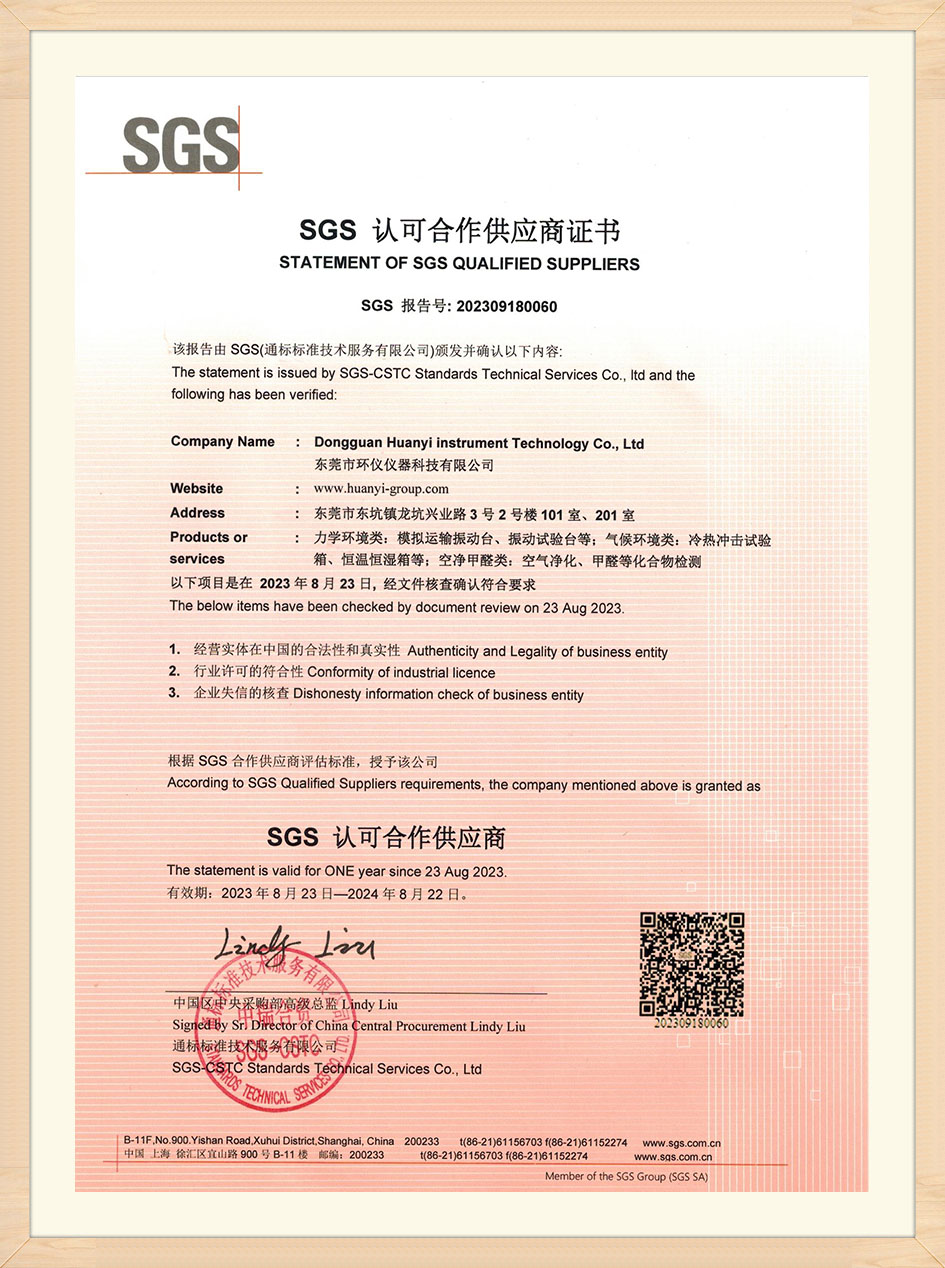
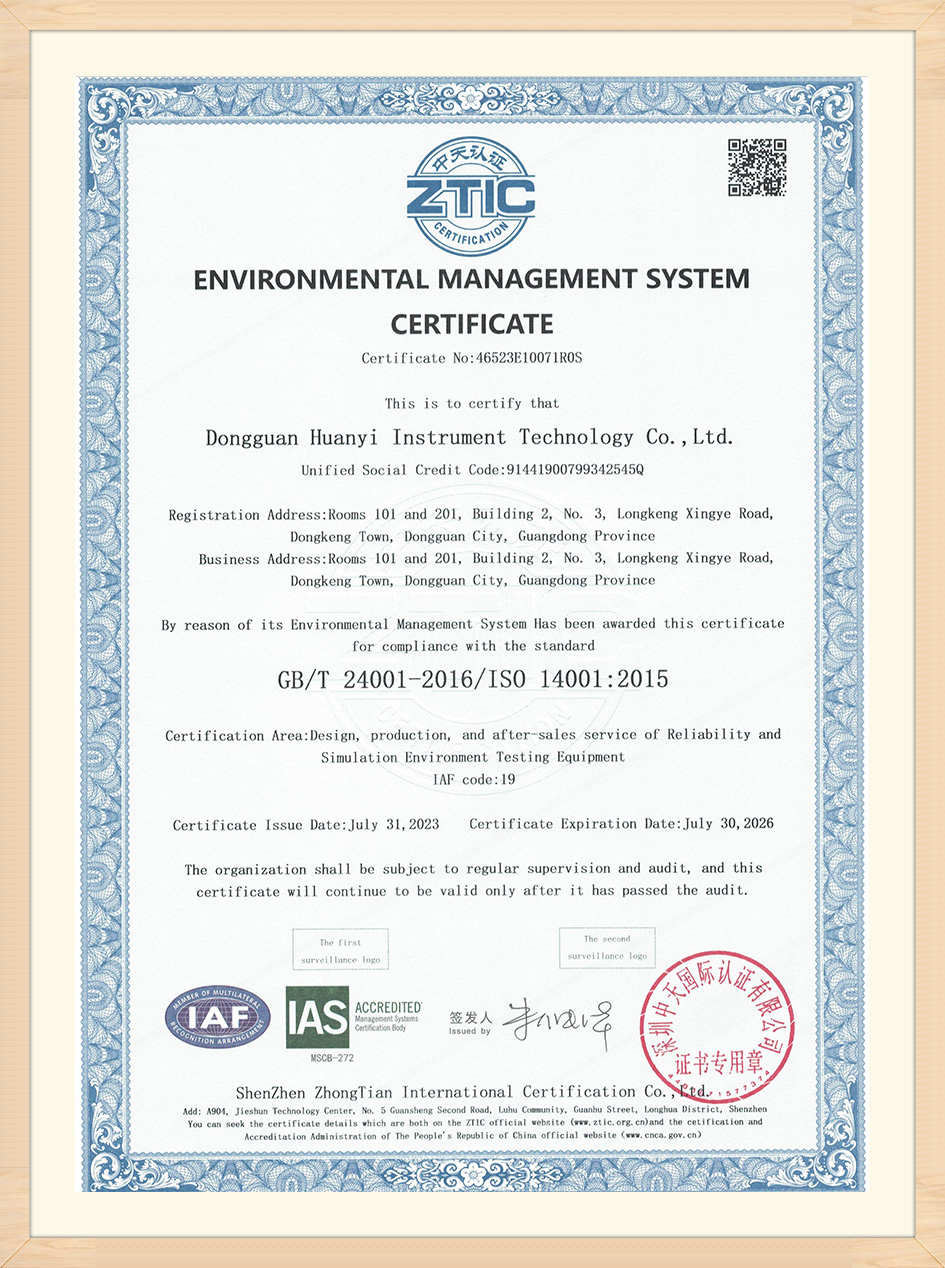
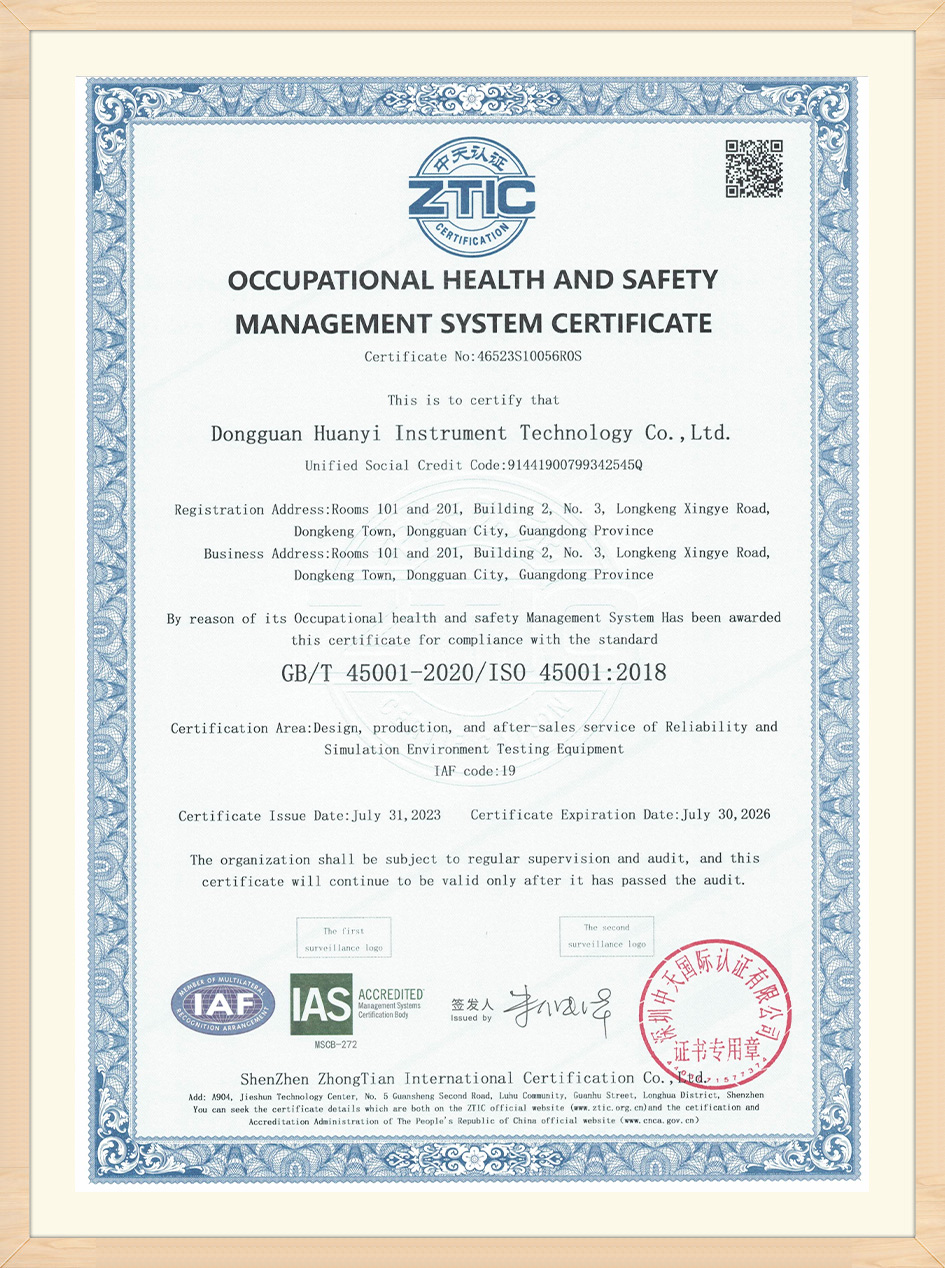
From a regional instrument manufacturer to an internationally trusted drafting body for environmental testing chambers.
Dongguan Huanyi Instrument Technology Co., Ltd. was officially established, focusing on basic environmental simulators.
Established Jiangsu Office to support regional procurement and service needs in Eastern China.
Expanded domestic footprint by establishing Xian and Chongqing Offices to support automotive and defense testing.
Established Shanghai and Beijing Offices to streamline operations and service networks in national research hubs.
Founded the Digital Sheet Metal Fabrication Center, transitioning to automated laser-cutting processes.
Passed the ISO9001:2015 Quality Management System Certification, demonstrating strict procedural control.
Recognized as a high-tech enterprise for six consecutive years. Drafted standard environmental simulation tests such as GB5364 and GBT50325.
Formed Guangdong Huance Testing Technology Co., Ltd., a specialized lab for independent third-party product testing.
Common inquiries from thermal engineers and procurement directors answered by our R&D department.
Our ovens conform to DIN 12880 standards. Depending on the chamber size, our forced-air distribution systems achieve spatial temperature uniformity between ±1.0°C and ±1.5°C across the operational range. Temperature fluctuations are held within ±0.3°C using our micro-PID controllers.
Yes. Thanks to our in-house Digital Sheet Metal Fabrication Center, we can construct custom chamber volumes, modify shelving systems, and integrate heavy-duty rolling shelves to handle heavier structural loads.
Each unit features multi-level protection: a primary PID high-limit cut-off, an independent hardware over-temperature safety controller (Class 2 protection), blower malfunction warnings, phase protection, and circuit breakers.
We supply full installation qualification (IQ), operational qualification (OQ), and performance qualification (PQ) templates. System calibrations are traceable to international standards, ensuring seamless regulatory compliance.
To maximize operating reliability, we use Schneider contactors, Omron PID modules, high-efficiency fan motors, and durable heating elements. This combination minimizes maintenance downtime and ensures high thermal stability.
Laser cutting and computerized sheet-metal processing prevent alignment errors and eliminate microscopic gaps. This creates a perfectly sealed inner chamber, reducing thermal leakage and lowering long-term operating costs.
Work with an industry standard-drafting manufacturer. Get a direct quote from our engineering sales team.
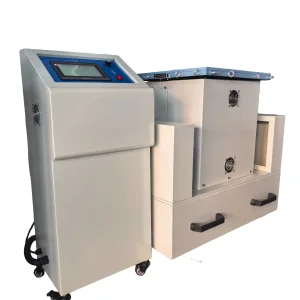
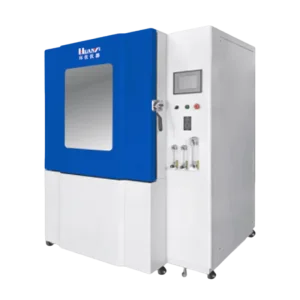
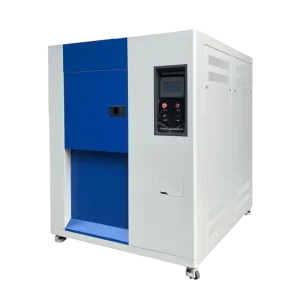
Request a Factory QuoteExtend your testing capability with our advanced shock, vibration, and VOC emission detection systems.
 Huanyi