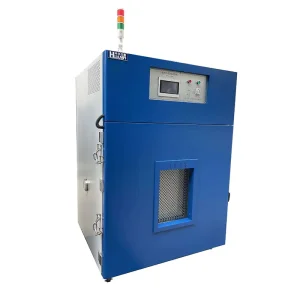
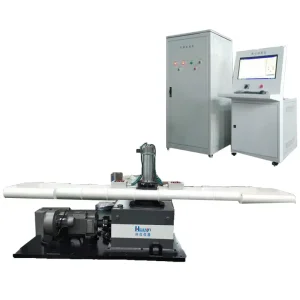
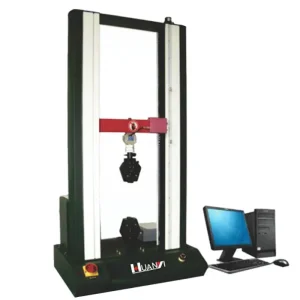
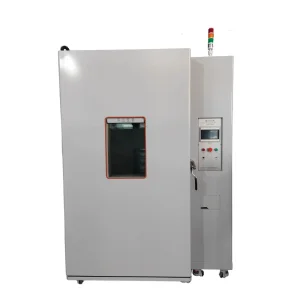
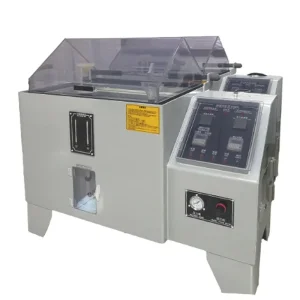
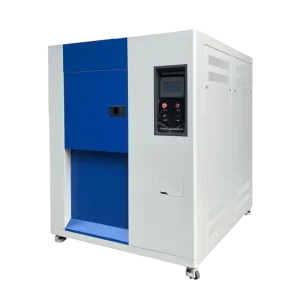
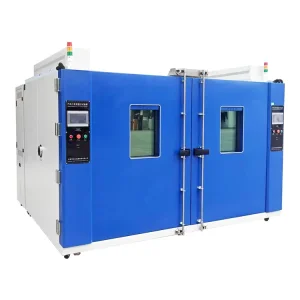
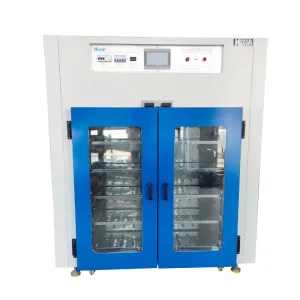
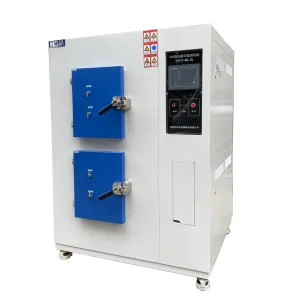
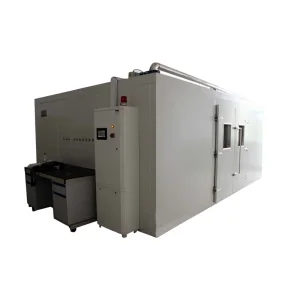
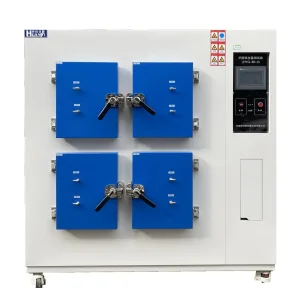
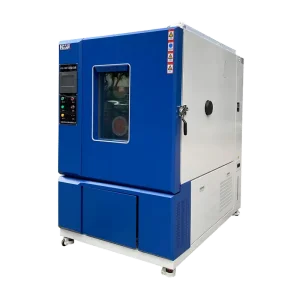
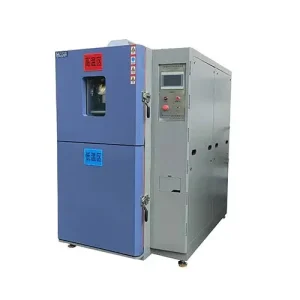
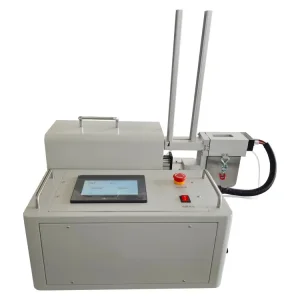
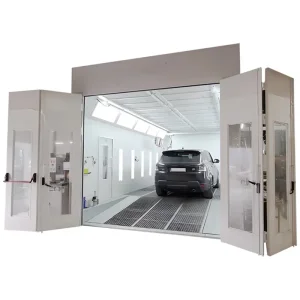
In modern industrial manufacturing, environmental integrity is paramount. Dynamic temperature fluctuations, humidity spikes, atmospheric pressure variances, and salt-laden conditions heavily influence the structural stability and operational lifespan of electronic assemblies, aerospace configurations, and new-energy batteries. Dongguan Huanyi Instruments Technology Co., Ltd. leads this frontier as a standard-setting manufacturer of highly engineered climate-simulation test architectures.
Our collaborative industry design addresses critical pain points in reliability testing. The demand for OEM Climatic Chambers and competitiveness in "Harga" (price-to-performance ratio) has driven our engineering teams to optimize mechanical efficiency while maintaining strict thermal tolerances. By offering customized air-to-air thermal shock machines, VOC emission structures, and walk-in chambers, we assist enterprise clients in navigating local and international regulatory frameworks with ease.
Across Southeast Asia, notably in high-growth manufacturing hubs like Indonesia, Malaysia, Vietnam, and Thailand, purchasing managers frequently prioritize the term "Harga Climatic Chamber". While "Harga" directly translates to price, experienced technical decision-makers view this through the lens of Total Cost of Ownership (TCO). Choosing a testing partner requires a balance between initial capital expenditure (CapEx) and operational lifecycle value (OpEx).
In Southeast Asia's equatorial environments, localized application scenarios demand unique structural modifications:
High ambient humidity and fluctuating utility grid voltages in SEA regions require chambers with built-in voltage stabilizers and heavy-duty, anti-condensation viewports. Huanyi’s battery thermal abuse test chambers isolate thermal anomalies effectively, aligning with international UN ECE R100 safety standards.
With major telecom and semiconductor hubs in Penang and Jakarta, SSD aging chambers must deliver continuous, non-stop operational profiles. Huanyi’s programmable control systems prevent moisture migration into sensitive electronic components during intense hot-and-humid cycles.
As industry needs evolve, testing equipment must adapt. The technology roadmap for climatic simulation chambers revolves around three pillars: green refrigerants, automation integration, and precise digital control algorithms.
Global regulations are phasing out high-GWP refrigerants. Our engineering roadmap includes the adoption of low-GWP refrigerants (such as R449A and CO2-based cascades) that achieve temperatures as low as -70°C while minimizing carbon footprint and complying with EU F-Gas regulations.
By integrating neural-network PID controllers, our chambers anticipate thermal loads and prevent temperature overshoot. Built-in IoT systems allow remote configuration, real-time diagnostic reporting, and seamless integration with factory MES (Manufacturing Execution Systems).
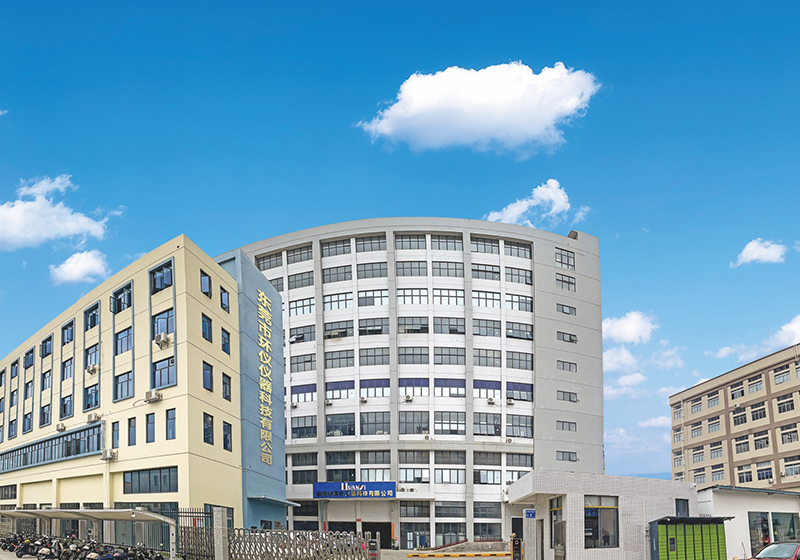
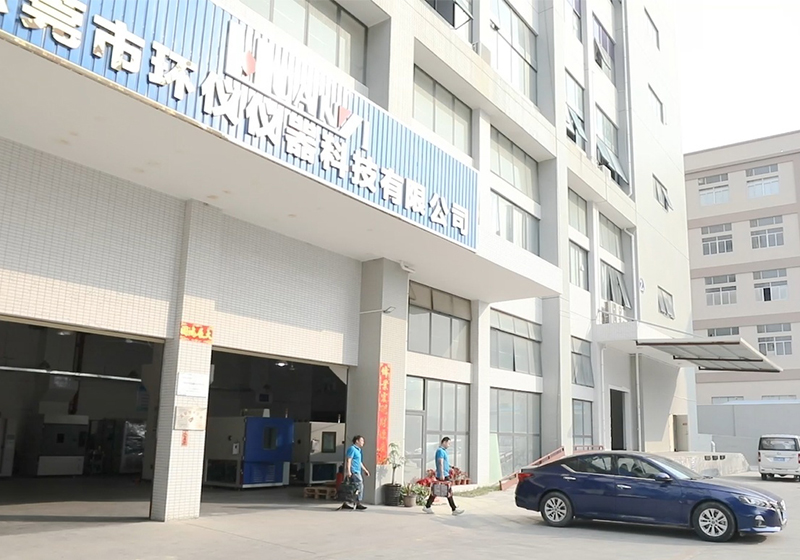
Located in the heart of Dongguan's manufacturing corridor, Huanyi Instruments utilizes a robust, localized supply chain ecosystem that delivers unmatched manufacturing turnaround times and competitive pricing structures.
Integrated Sheet Metal Processing: Our in-house digital sheet metal facility features automated laser-cutting tools that optimize material yields, reduce processing waste, and lower structural costs.
ERP-Driven Production Flow: Enterprise Resource Planning (ERP) tracking monitors every stage from raw material intake to final system calibration, ensuring on-time delivery even for complex custom builds.
Strategic Global Sourcing: Critical components—such as compressors and controllers—are sourced from world-class manufacturers to maintain system reliability, while structural and custom assembly work is optimized in our Dongguan facility.
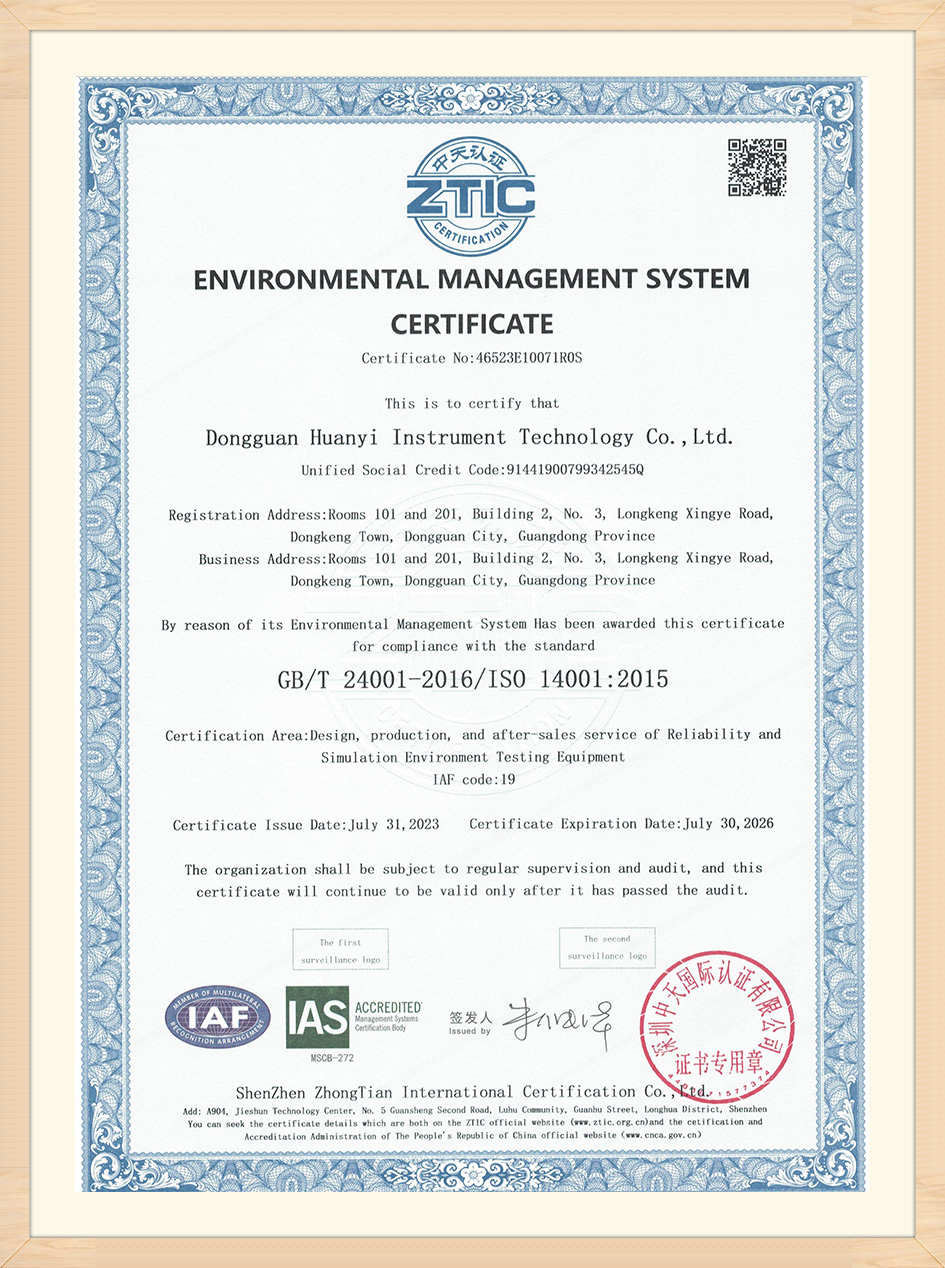
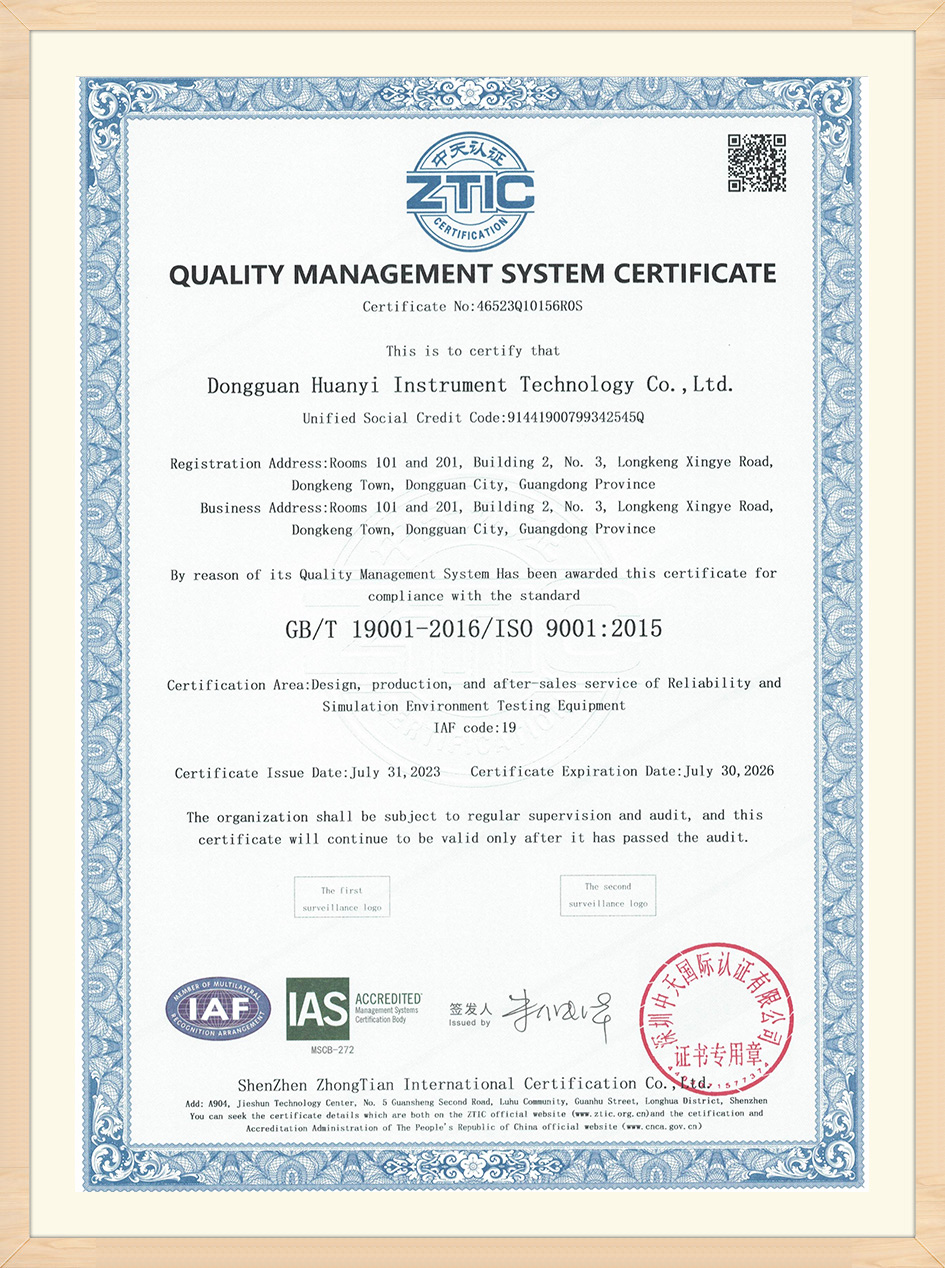
We source critical control components from globally recognized brands to ensure long-term performance stability. Our manufacturing process conforms to rigorous ISO 9001 quality management protocols, with multi-stage verification steps from raw materials to final functional commissioning.
Huanyi actively participates in drafting national and industrial environmental simulation standards in China (e.g., GB5364 and GBT50325). This involvement ensures our engineers remain at the forefront of regulatory changes and testing methodologies.
Backed by over 20 years of collective industry experience, our R&D personnel are equipped to handle complex OEM projects. We maintain custom design files, thermal modeling systems, and structural testing labs to support challenging design criteria.
In 2022, we established a dedicated testing subsidiary, Guangdong Huance Testing Technology Co., Ltd., to provide third-party validation, calibration services, and compliance verification for international audits.
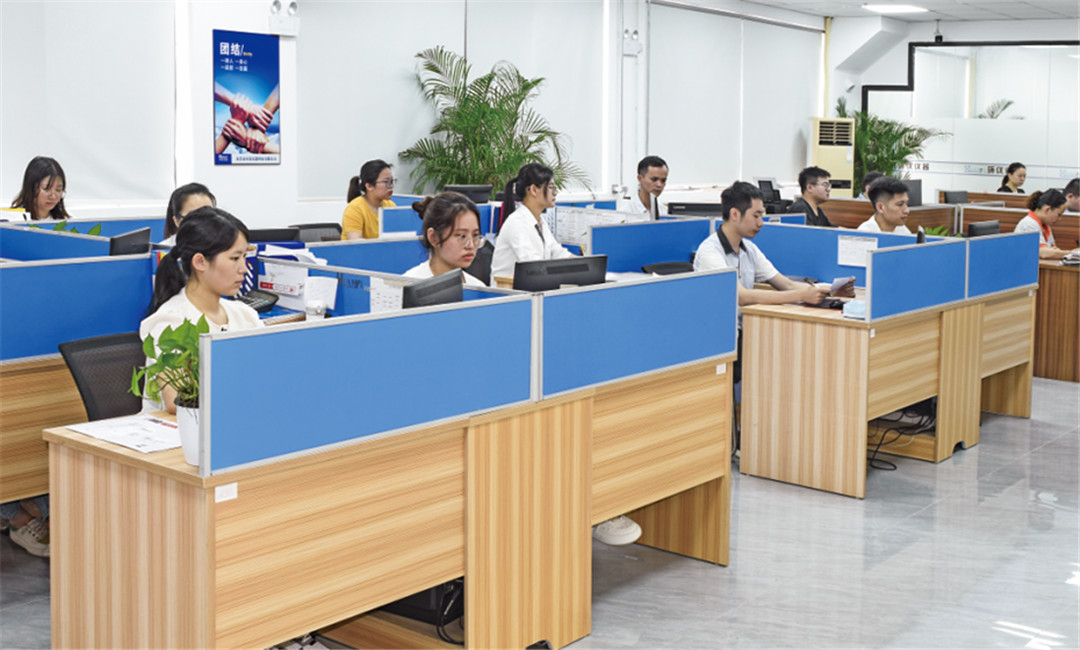
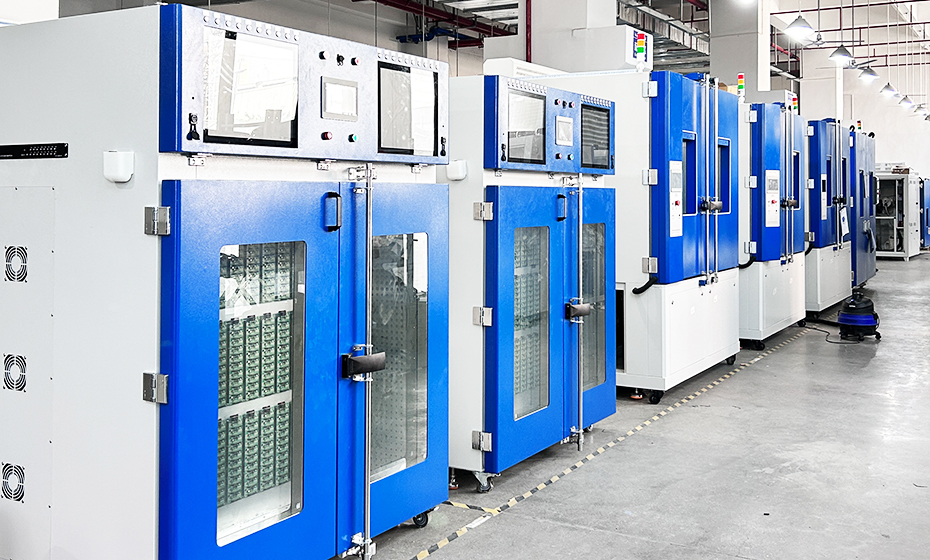
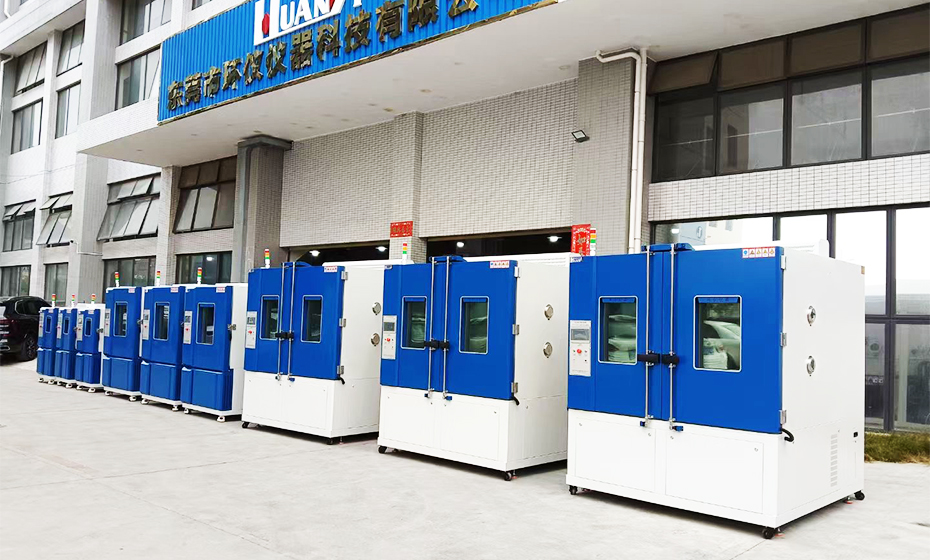
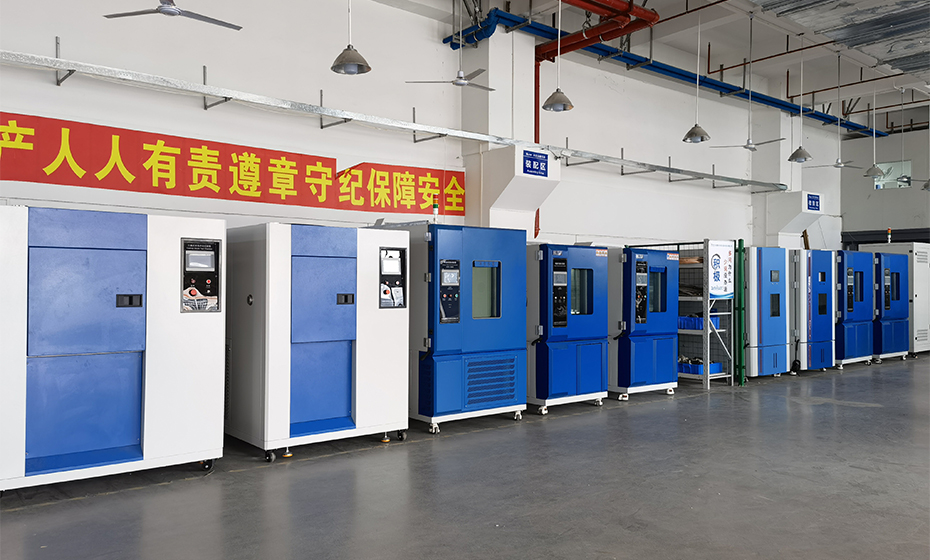
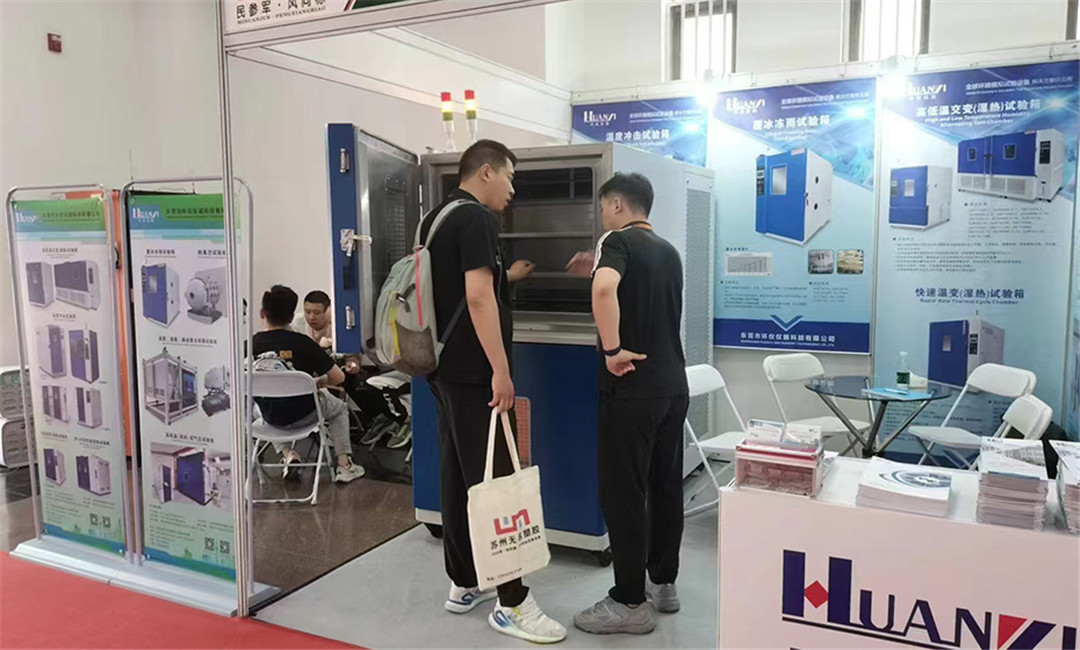
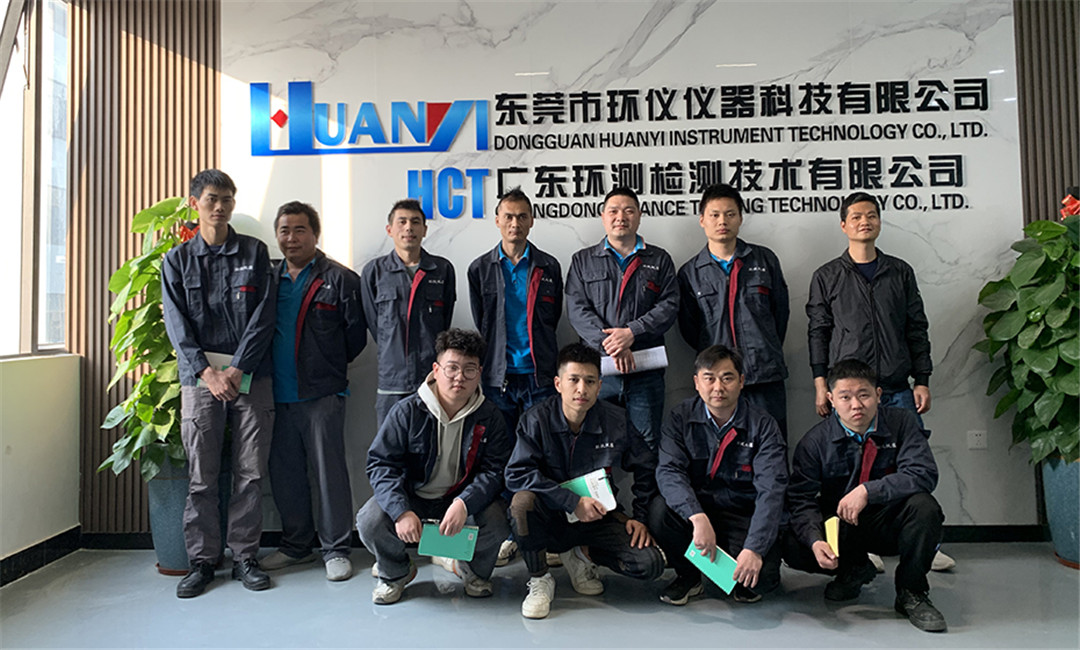
A timeline highlighting our expansion, infrastructure development, and integration of high-precision environmental simulation capabilities.
Dongguan Huanyi Instrument Technology Co., Ltd. is founded in Dongguan, focusing on specialized environmental test equipment R&D.
Established the Jiangsu Regional Office to support automotive and semiconductor manufacturers across Eastern China.
Established regional offices in Xi'an and Chongqing to support aerospace and defense research projects.
Opened dedicated regional offices in Shanghai and Beijing to improve localized technical sales and service response times.
Built a new digital sheet metal center featuring high-precision automated laser cutting and CNC bending equipment.
Passed the ISO 9001:2015 Quality Management System Certification to reinforce product and process reliability.
Participated in drafting national standards like GB5364 and GBT50325, and received national high-tech enterprise certification.
Established Guangdong Huance Testing Technology Co., Ltd. as a dedicated facility for third-party validation and calibration.
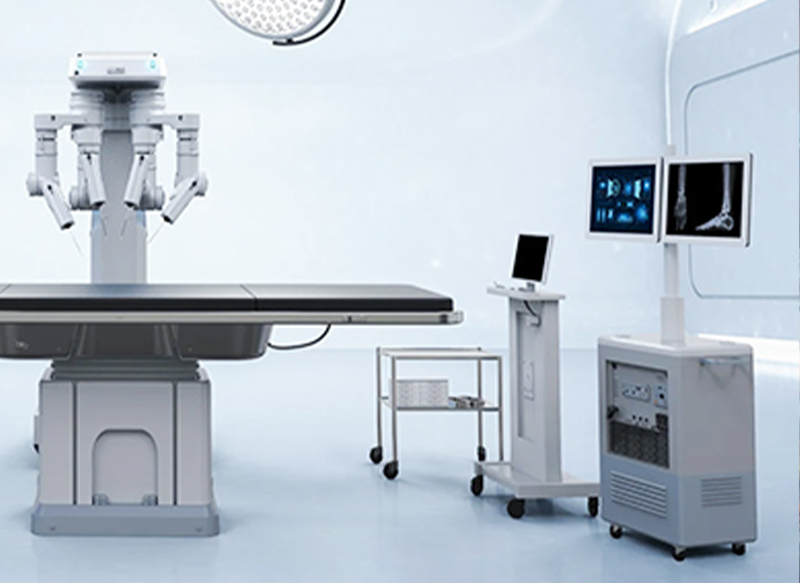
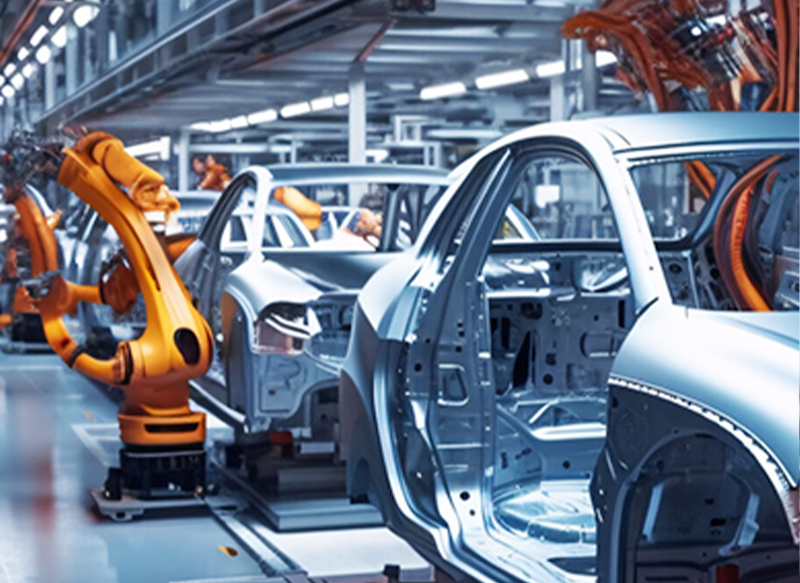
We provide environmental simulation systems configured to meet the testing requirements of diverse commercial and industrial sectors.
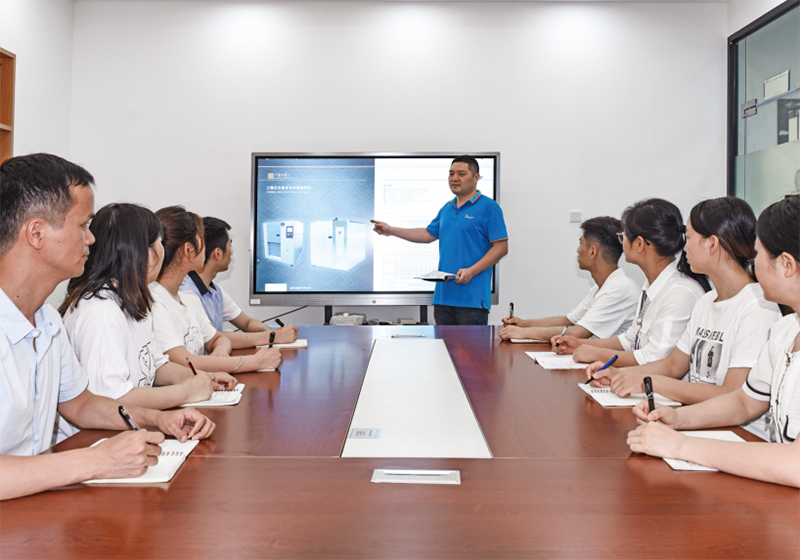
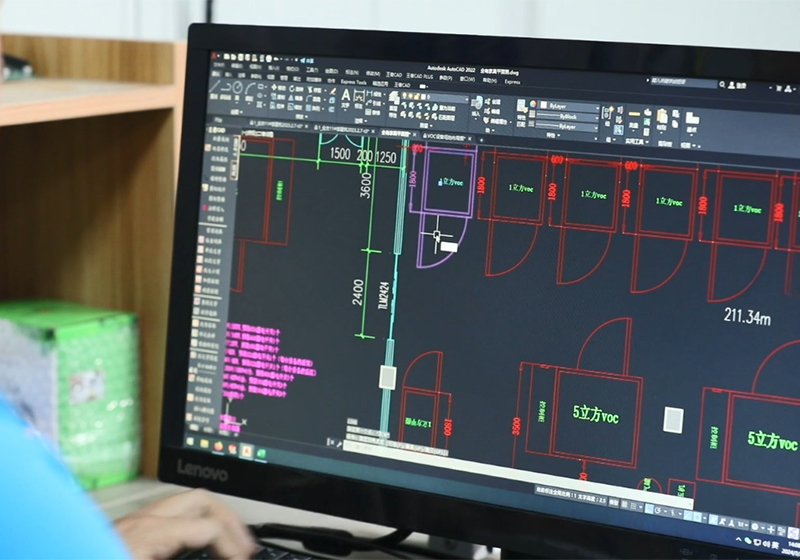
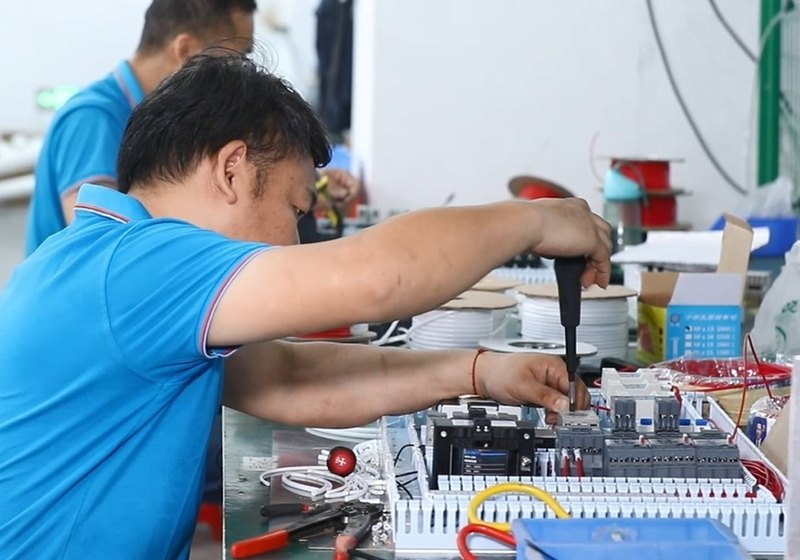
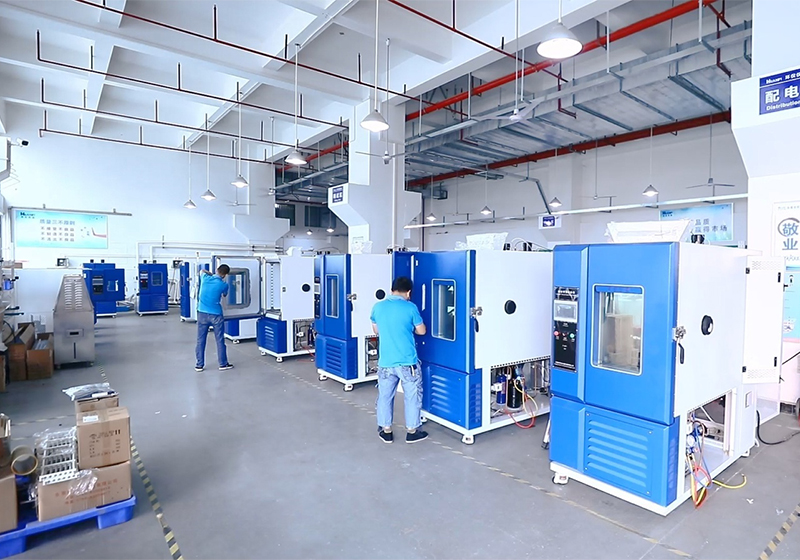
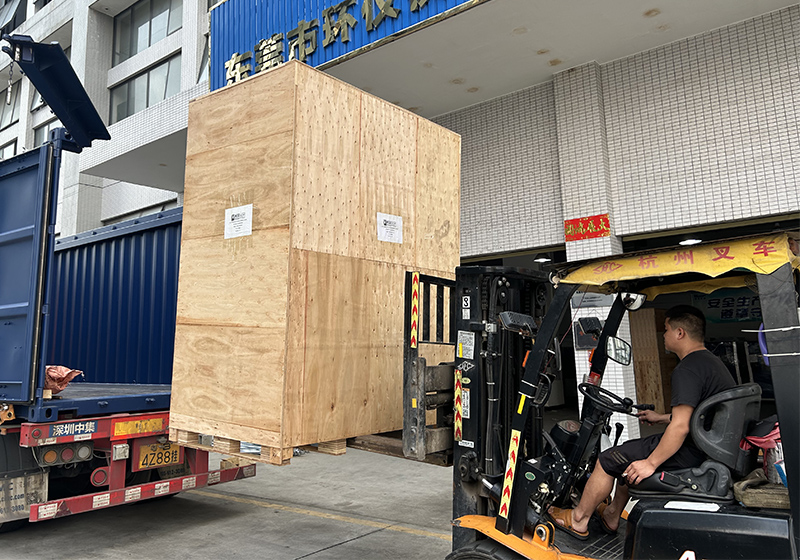




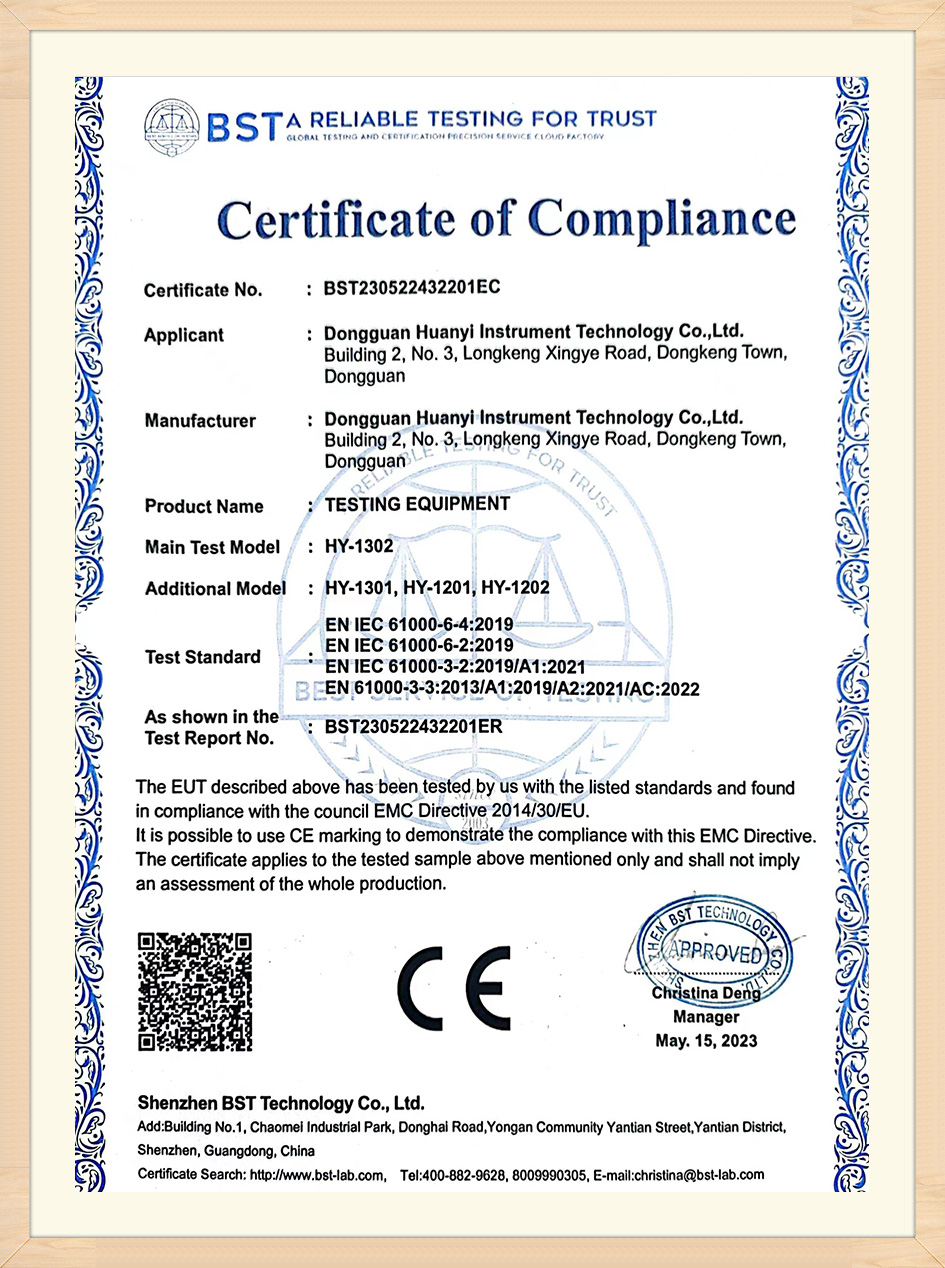
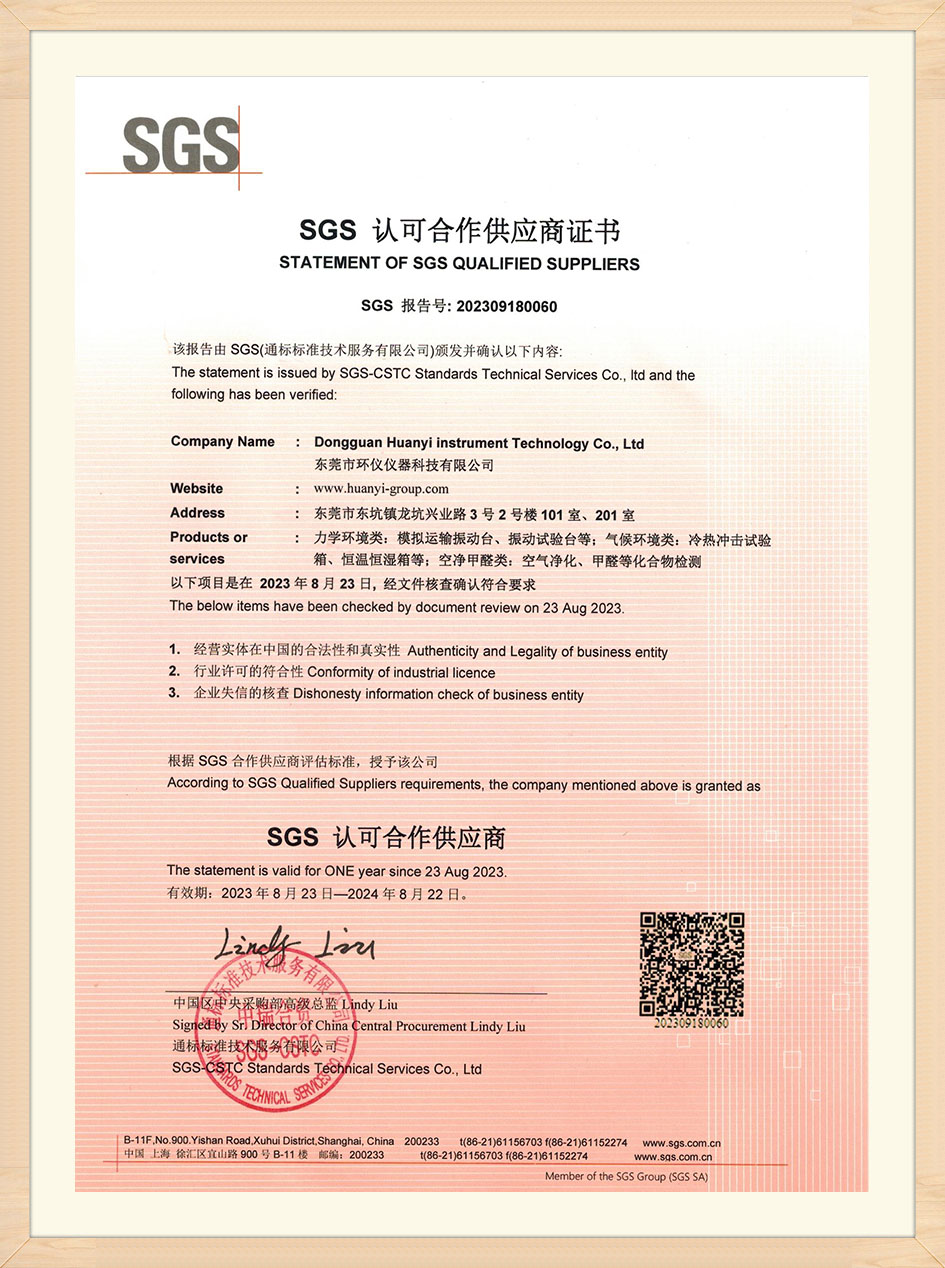
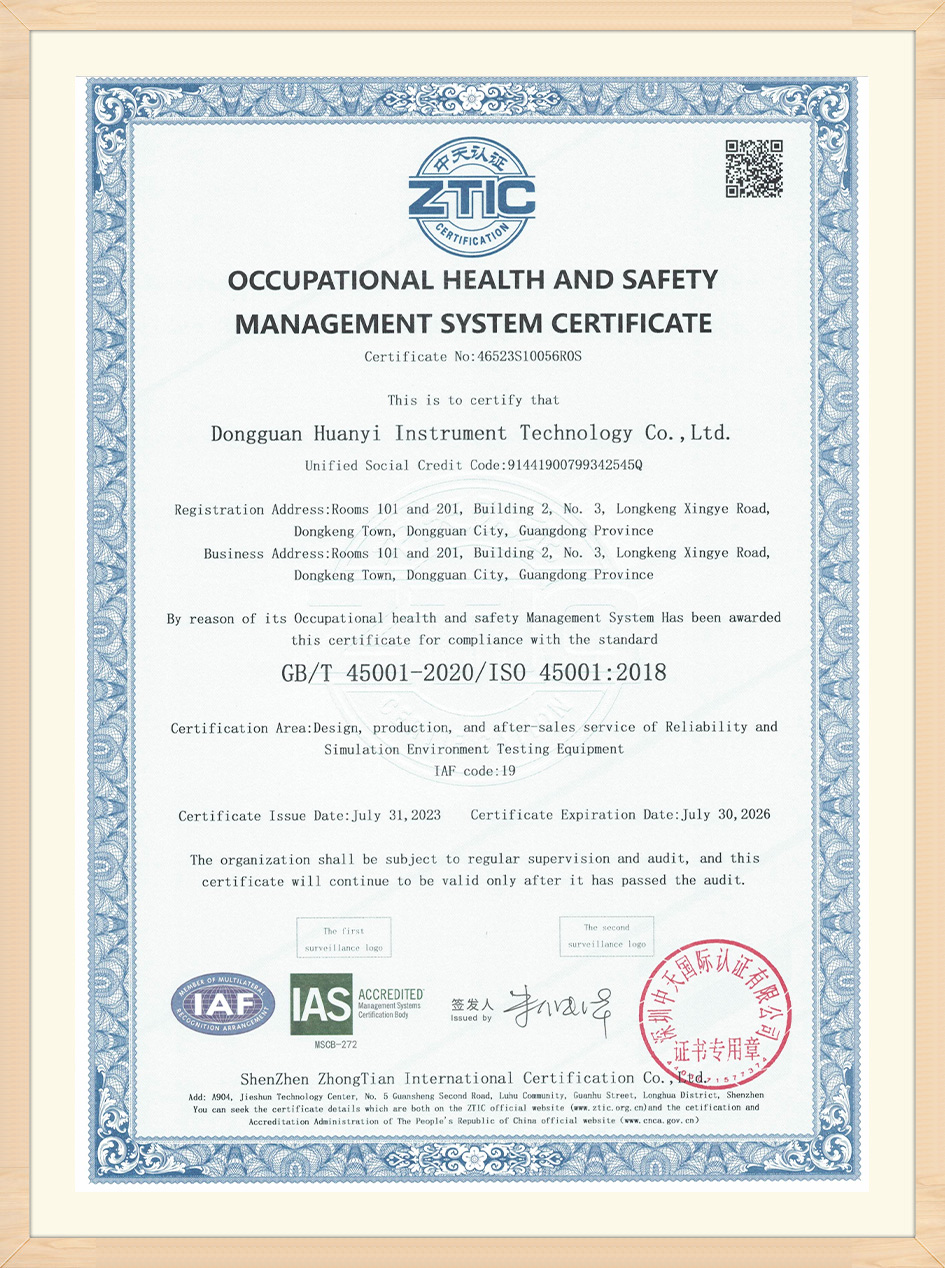
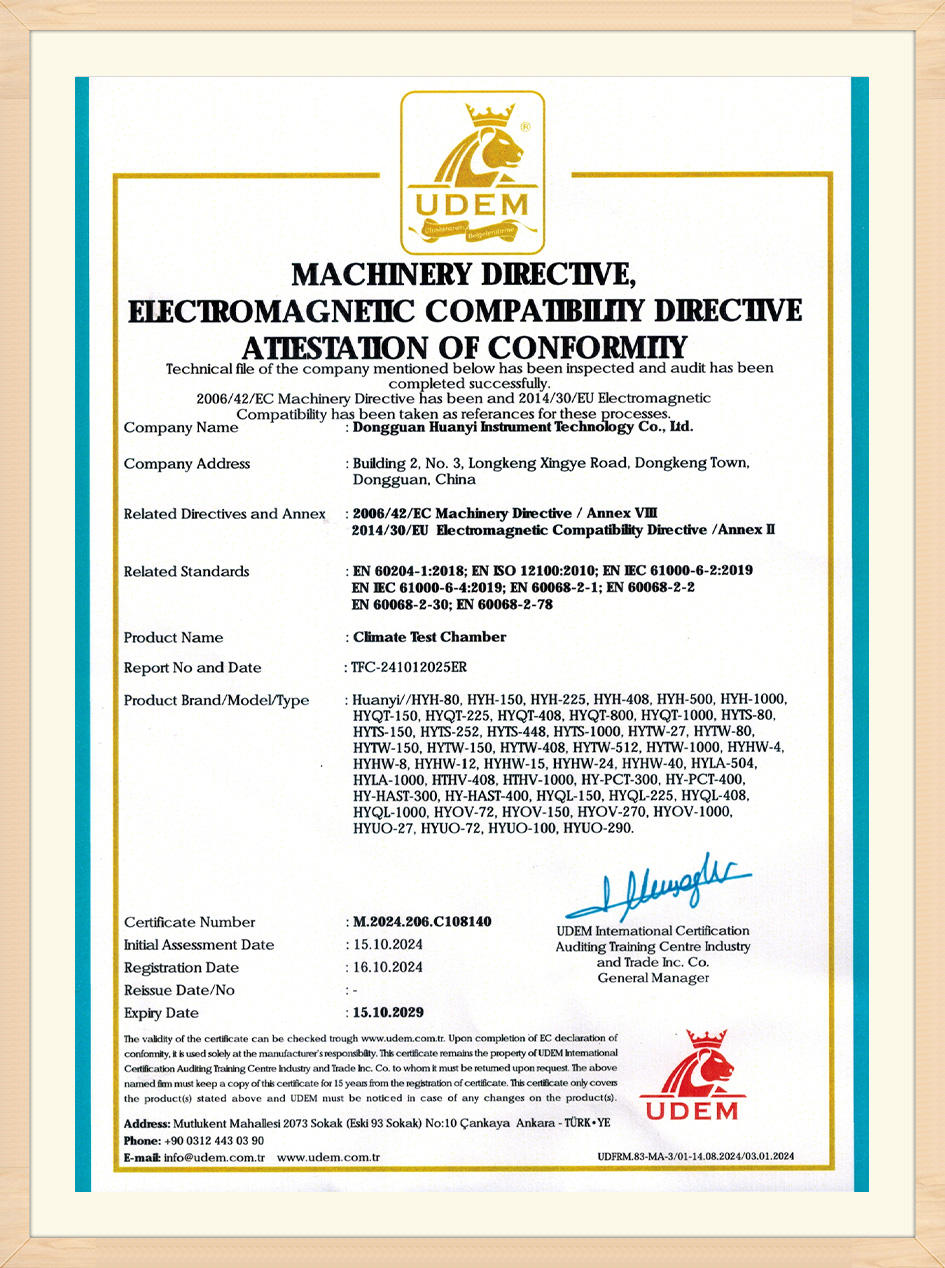
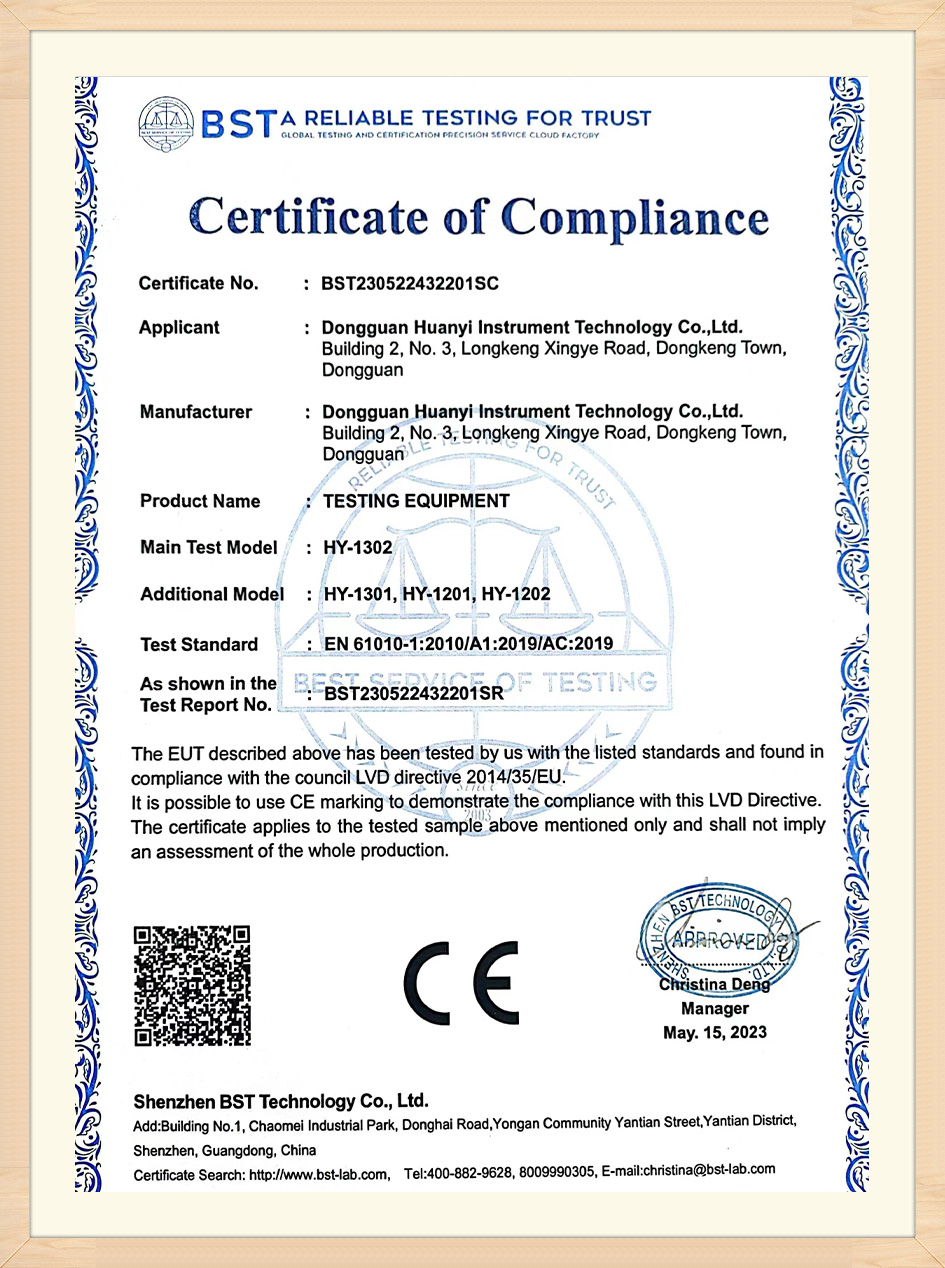
Huanyi environmental test equipment conforms to international compliance criteria. Our production frameworks are certified to meet international performance and safety expectations.
Browse clear answers to common questions regarding technical features, custom configurations, and pricing models for environmental chambers.
Pricing is influenced by structural dimension requirements (ranging from benchtop to large walk-in models), target temperature ranges (-70°C to +150°C), temperature transition rates (such as standard 1°C/min or rapid-rate 15°C/min shock cycles), and additional safety systems for battery testing (like pressure relief ports and nitrogen purging).
Yes. As an OEM manufacturer, we design and produce environmental chambers tailored to specific dimensions, performance envelopes, and software integration requirements. We also offer customization for custom paint schemes and branding configurations.
Our ERP system monitors component supply levels, fabrication workflows, assembly steps, and calibration schedules. This coordination minimizes bottlenecks, enabling on-time delivery for standard and customized builds.
These chambers are built to handle rapid temperature transitions while incorporating safety features for battery testing, including explosion-proof pressure relief vents, fire-suppression system connectors, and continuous gas monitoring (CO, H2).
We work with regional service partners to manage installation, commissioning, calibration, and local warranty support. Our equipment conforms to CE and ISO standard requirements to simplify local laboratory certification.
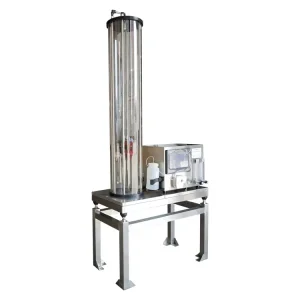
VOC chambers measure the release profiles of volatile organic compounds from plastics, textiles, and automotive interior panels. We manufacture specialized walk-in VOC chambers and multi-barrel emission chambers that assist manufacturers in meeting environmental standards like ISO 16000.
 Huanyi