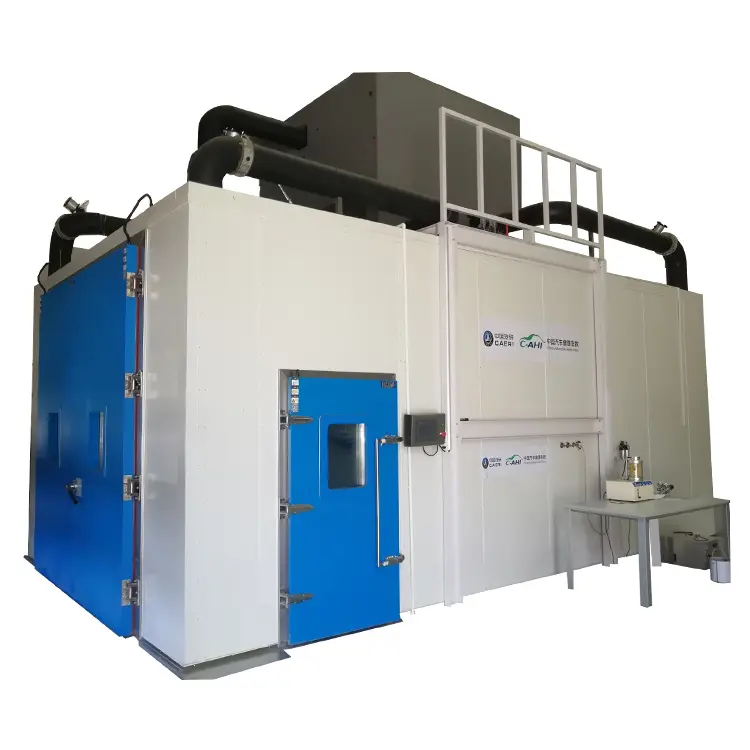
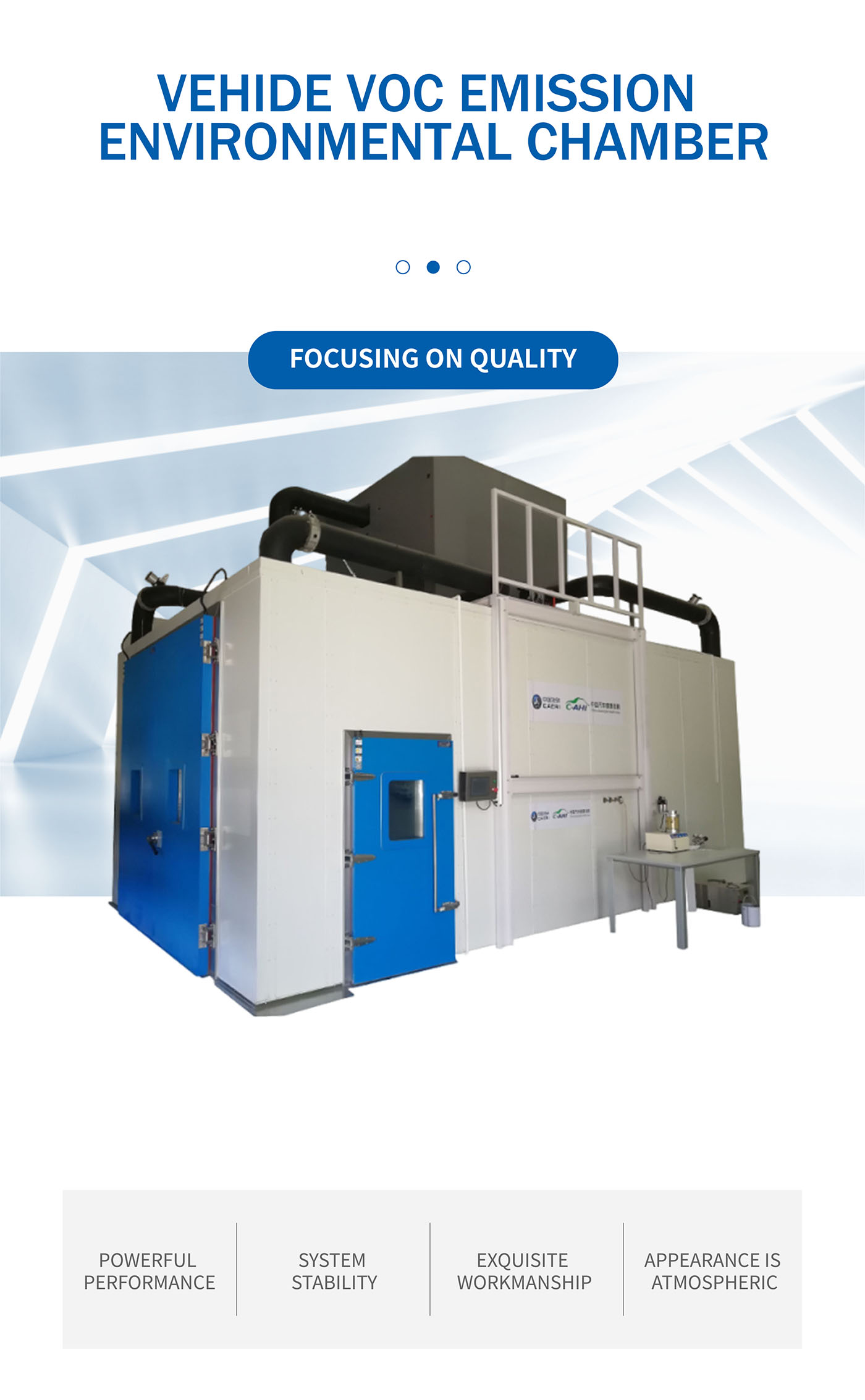
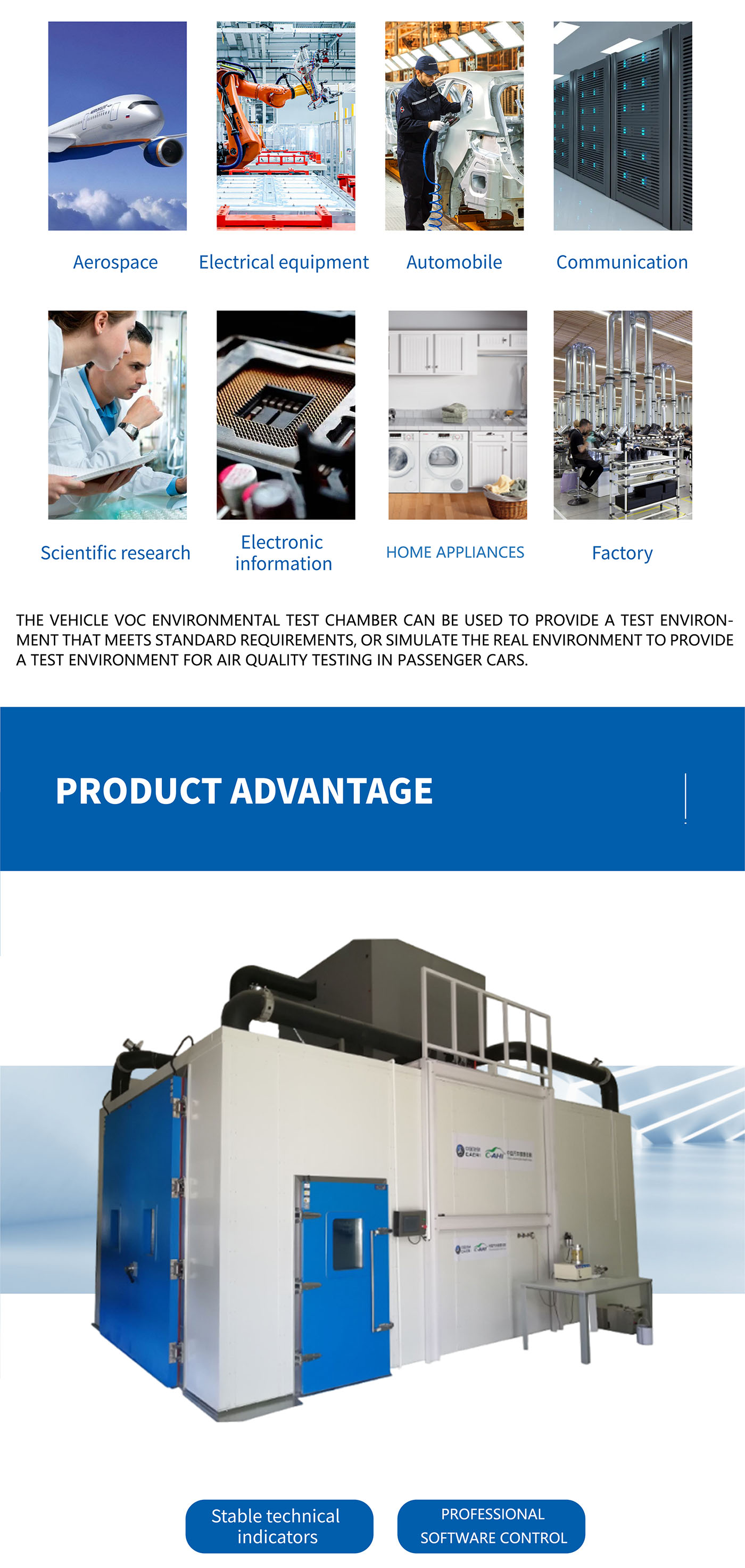
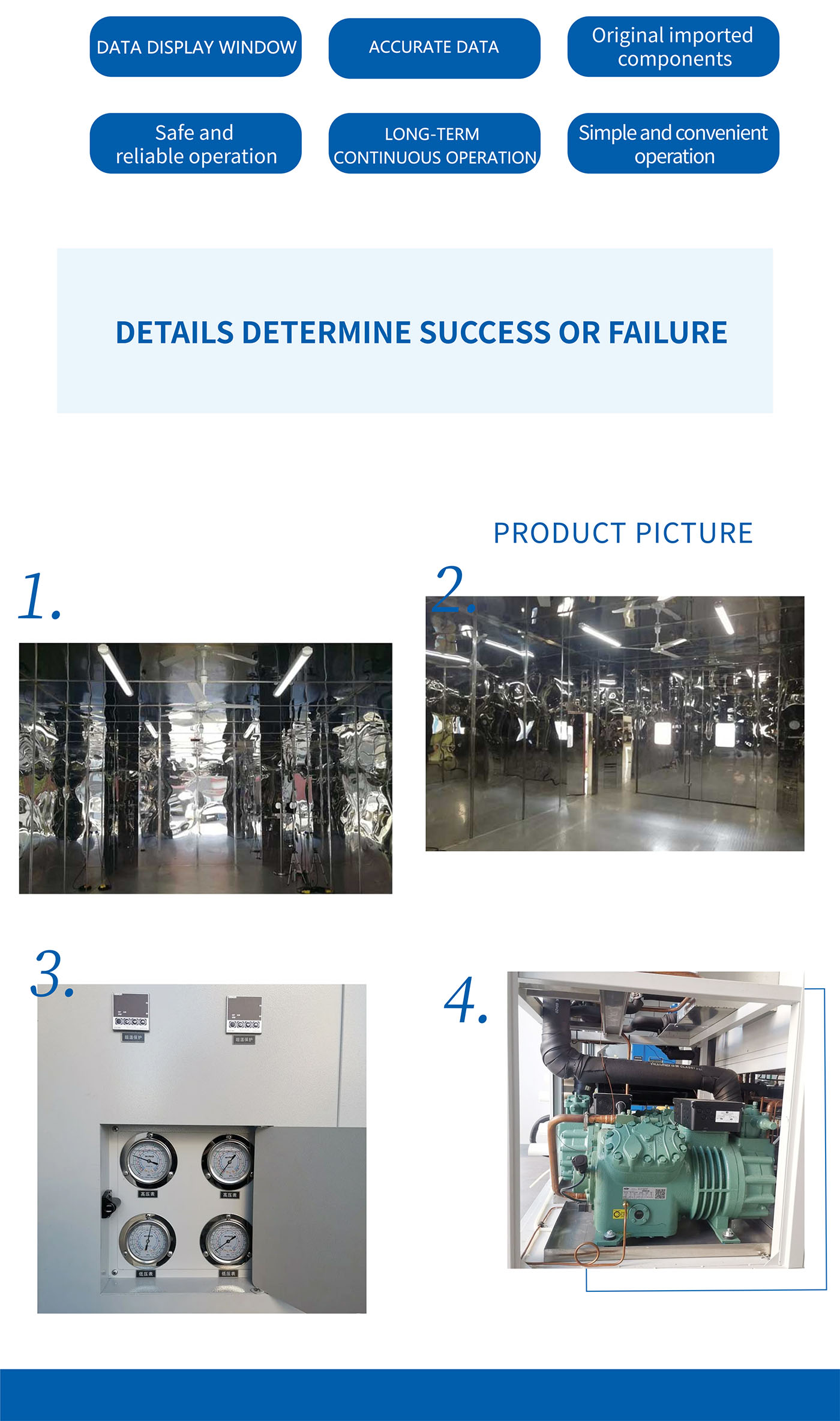
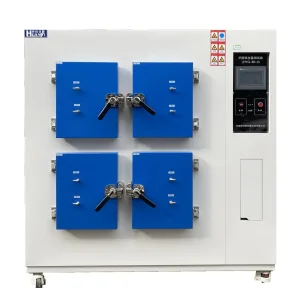
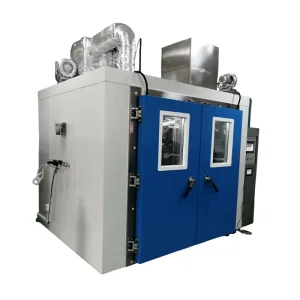
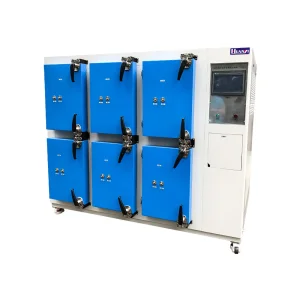
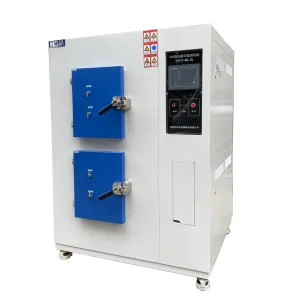
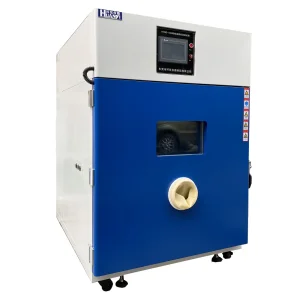
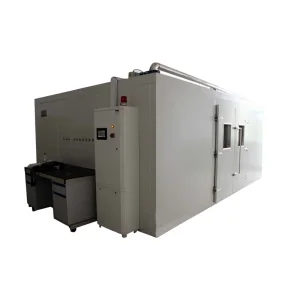
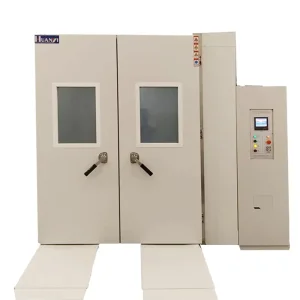
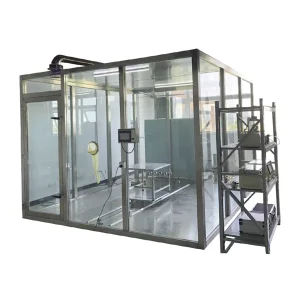
The vehicle VOC environmental test chamber can be used to simulate the real environment and provide a test environment for the air quality detection in passenger cars.
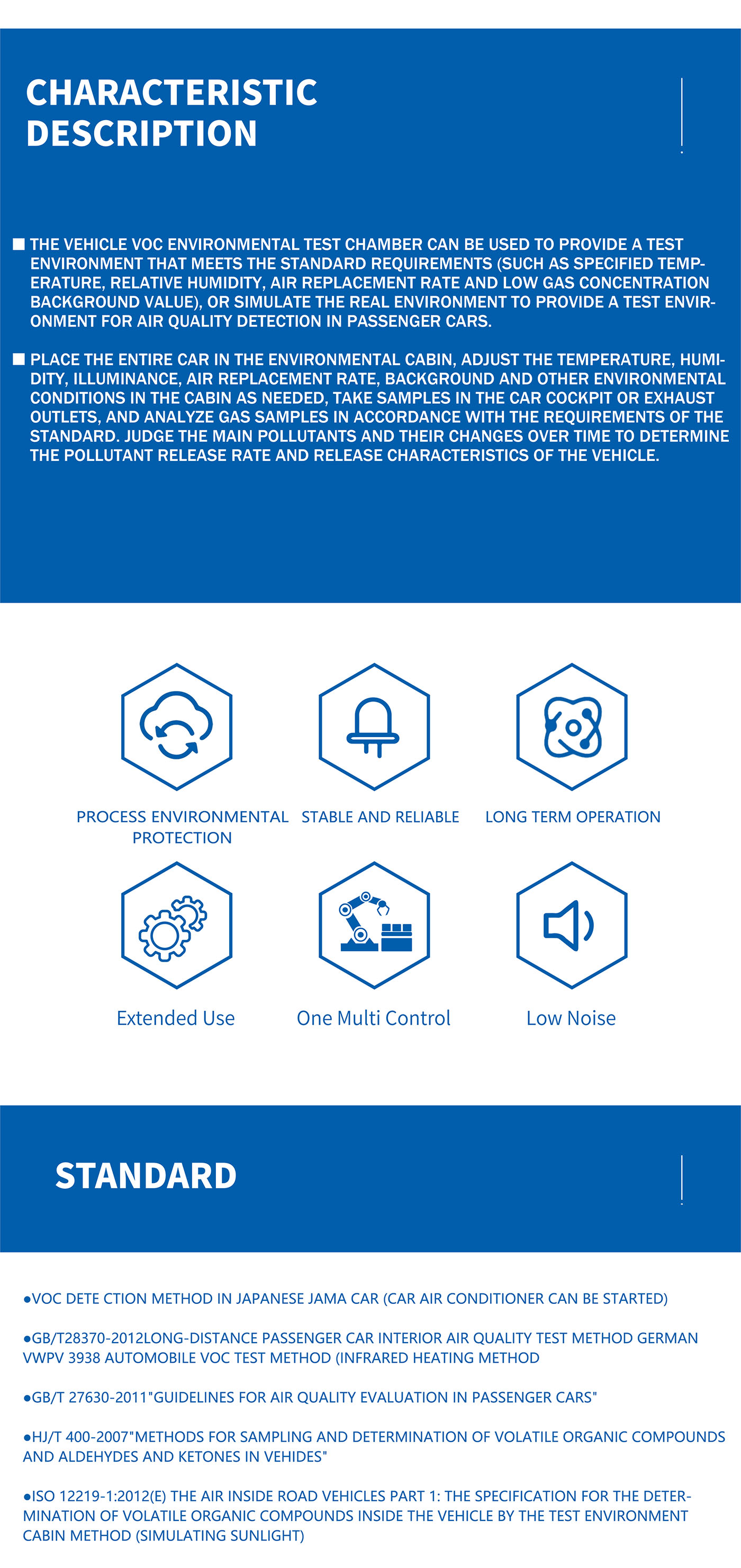
The vehicle VOC environmental test chamber can be used to provide a test environment that meets the standard requirements (such as specified temperature, relative humidity, air replacement rate and low gas concentration background value), or simulate the real environment to provide a test environment for air quality detection in passenger cars.
Place the entire car in the environmental cabin, adjust the temperature, humidity, illuminance, air replacement rate, background and other environmental conditions in the cabin as needed, take samples in the car cockpit or exhaust outlets, and analyze gas samples in accordance with the requirements of the standard. Judge the main pollutants and their changes over time to determine the pollutant release rate and release characteristics of the vehicle.
Meet the standards
VOC detection method in Japanese JAMA car (car air conditioner can be started)
GB/T28370-2012 Long-distance passenger car interior air quality test method German VWPV 3938 automobile VOC test method (infrared heating method)
GB/T 27630-2011 "Guidelines for Air Quality Evaluation in Passenger Cars"
HJ/T 400-2007 "Methods for sampling and determination of volatile organic compounds and aldehydes and ketones in vehicles"
ISO 12219-1:2012(E) The air inside road vehicles Part 1: The specification for the determination of volatile organic compounds inside the vehicle by the test environment cabin method (simulating sunlight)
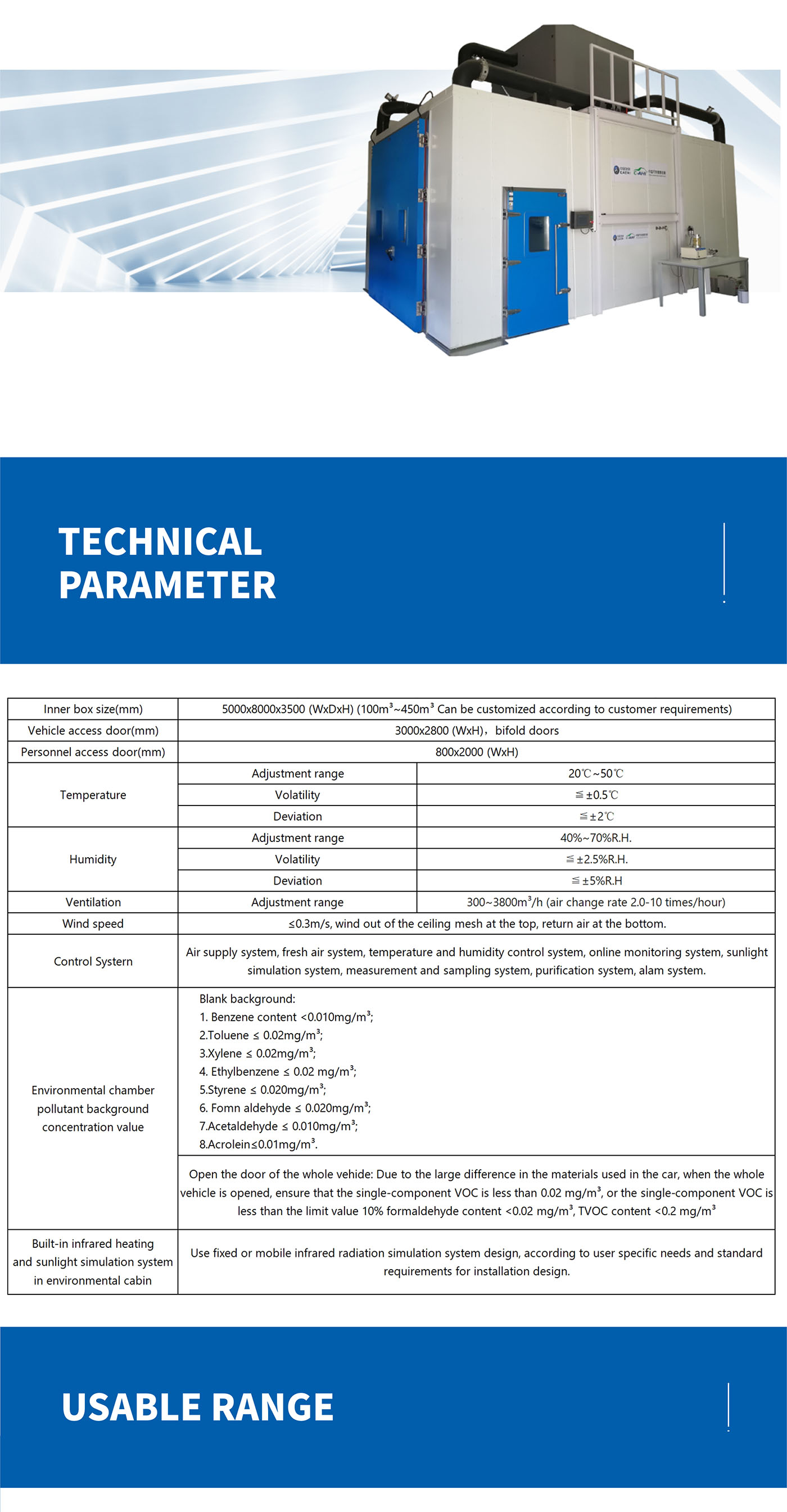
Technical parameters
Inner box size(mm)
5000x8000x3500 (WxDxH) (100m³~450m³ Can be customized)
Fixed or mobile infrared radiation simulation system based on user specific needs.
Product Gallery
Demonstration Video
Frequently Asked Questions
Q1: What is the primary purpose of the Vehicle VOC Test Chamber?
A1: It is designed to provide a controlled environment (temperature, humidity, air flow) to detect and analyze volatile organic compounds (VOCs) and aldehyde-ketone emissions within passenger cars.
Q2: Can the chamber be customized for different vehicle sizes?
A2: Yes, the standard volume ranges from 100m³ to 450m³, but it can be fully customized according to specific customer requirements.
Q3: Does the chamber support sunlight simulation?
A3: Yes, it includes a built-in infrared heating and sunlight simulation system, which can be fixed or mobile depending on the test standards.
Q4: What are the background concentration limits for pollutants in the chamber?
A4: The chamber maintains extremely low blank background levels, such as Formaldehyde ≤ 0.020mg/m³ and Benzene < 0.010mg/m³, ensuring accurate vehicle emission measurements.
Q5: Which international standards is this equipment compatible with?
A5: It meets several major standards including ISO 12219-1:2012, GB/T 27630-2011, HJ/T 400-2007, and Japanese JAMA VOC detection methods.
Q6: How is the air circulation managed in the chamber?
A6: The system uses a specialized air supply and fresh air system where wind flows out from the ceiling mesh and returns through the bottom, maintaining a speed ≤0.3m/s.
 Huanyi