Why Choose a Vibration Test Machine for Product Testing?

Time:2026-10-29 Author:Madeline
0%

A product can look sturdy on a workbench and still fail after hours of transport or operation. A Vibration Test Machine helps reveal weaknesses that ordinary visual checks cannot show. It applies controlled motion while sensors record how the product responds. Engineers can spot resonance, loose fasteners, cracked solder joints, or components that shift under repeated loading. Small faults matter.

Vibration analyst Tom Irvine’s technical work offers a useful principle, paraphrased here: “Measure the vibration input, then verify the product’s response.” That distinction is practical. A test machine does not simply shake an item; it must reproduce a relevant vibration profile and collect trustworthy data. For example, an accelerometer mounted near a circuit board can show whether a particular frequency creates a sharp response. The fixture matters, too. A poorly secured sample may produce misleading results.

Choosing a Vibration Test Machine can help teams compare designs, investigate failures, and improve confidence before products reach customers. The value depends on careful setup, calibrated sensors, and test conditions that reflect real use. A laboratory profile cannot represent every road, package, or operating environment. That limitation deserves attention, not a footnote. Engineers should document assumptions and review unexpected results rather than treating a passing test as proof of perfection. The machine is a tool; sound judgment still matters.
Why Choose a Vibration Test Machine for Product Testing?

What a Vibration Test Machine Is and How It Works

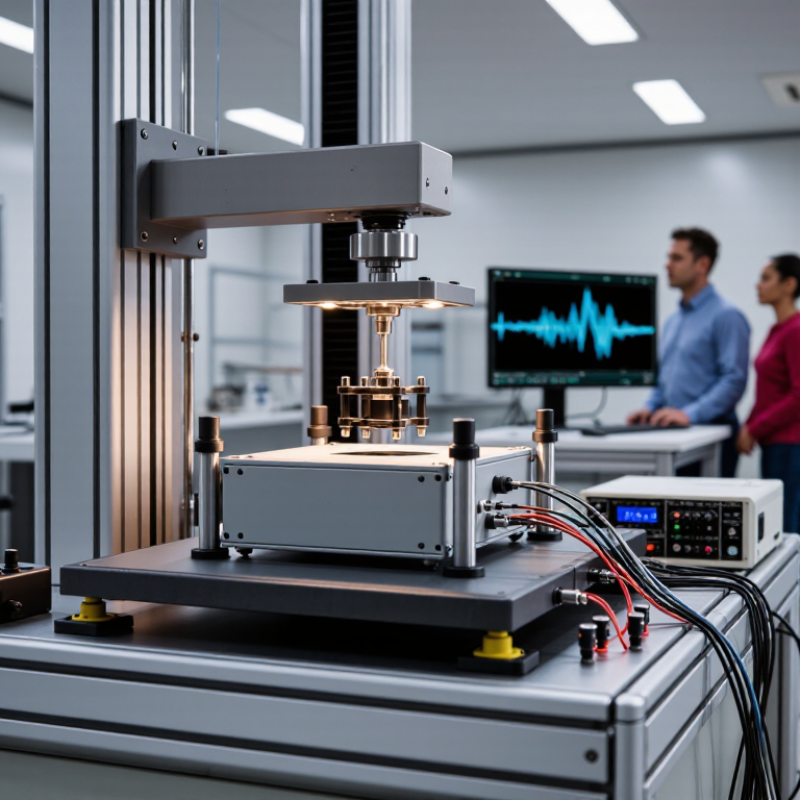
A vibration test machine is a shaker system that applies controlled motion to a product or component. A fixture secures the sample to a moving table; sensors measure acceleration while a controller adjusts frequency and force. Engineers can run sine sweeps to locate resonances, or random vibration profiles to simulate less predictable operating conditions.

Small shifts matter. A loose bolt or uneven fixture can distort readings, so mounting and sensor placement must be checked before testing.

IEC 60068-2-6:2007 describes sinusoidal vibration testing across 1 Hz to 5,000 Hz, with the test profile chosen for the specimen and purpose. That range is not a requirement to test every product across every frequency. ISO 16750-3:2023 addresses mechanical-load tests for road-vehicle electrical and electronic equipment, while U.S. Department of Defense MIL-STD-810H Method 514.8 outlines vibration test procedures tailored to expected environments.

In practice, engineers compare the measured response with acceptance criteria, then inspect for cracked solder joints, loosened fasteners, or intermittent signals.

Watch the bolts. A fixture can mislead. Results describe performance under the selected profile, not every vibration a product may encounter in service.

How Vibration Testing Replicates Real-World Conditions

A vibration test machine turns rough transport and operating conditions into controlled motion. Engineers mount a product on a fixture, then apply measured acceleration across selected frequencies. This can reveal loose connectors, cracked solder joints, or a battery shifting inside its housing. Small details matter. A poorly secured cable may fail before the main structure does.

IEC 60068-2-64 specifies broadband random vibration testing across a frequency range of 5 Hz to 2,000 Hz. ASTM D4728 also describes random-vibration testing for shipping containers. These standards help engineers build repeatable profiles, rather than relying on an arbitrary shake. Test teams can compare vibration levels, exposure time, and product response with measured field conditions. Still, a shaker is not a road. Real vehicles add impacts, temperature changes, and mounting differences. A lab profile may miss those interactions, so field measurements should inform the test. Some products also resonate at narrow frequencies; inspecting the response during testing can expose those weak points.

Which Product Failures Vibration Testing Can Reveal

Why Choose a Vibration Test Machine for Product Testing?

Which Product Failures Vibration Testing Can Reveal

Vibration testing exposes weaknesses that a brief visual inspection can miss. Repeated movement can loosen fasteners, fatigue solder joints, crack circuit boards, and wear insulation. It can also reveal resonance, when a product shakes sharply at a particular frequency. A connector may pass a bench check, then lose contact during vibration. That is easy to miss.

Test engineers monitor acceleration and inspect for physical damage and intermittent electrical faults. The ISTA 3A procedure covers packaged products weighing up to 70 kilograms for parcel delivery testing, including vibration exposure. This scope illustrates why packaged goods need testing as well as the products inside them: movement can cause abrasion, shifted cushioning, or contact damage. Test conditions should match the product’s expected shipping or operating environment.

NASA’s Dynamic Environmental Criteria handbook, NASA-HDBK-7005, describes vibration environments as frequency-dependent, reinforcing the need to assess responses across relevant frequencies. A single test profile cannot represent every real journey. Fixture stiffness can also alter results, so engineers should check mounting and sensor placement. No test is perfect. If a failure appears, repeat testing and inspect the failure point before changing the design; otherwise, a fix may address the symptom, not the cause.

Why Choose a Vibration Test Machine for Product Testing? — Which Product Failures Vibration Testing Can Reveal

Product Area Failure Vibration Testing Can Reveal Typical Test Observation Potential Product Impact What the Test Helps Evaluate
Fasteners and joints Loosening, loss of preload, or joint separation Changes in torque, visible movement, rattling, or gaps after exposure Reduced structural stability, noise, or detached components Whether the joint design and locking method withstand expected vibration
Solder joints and circuit boards Cracked solder joints, fractured leads, or board damage Intermittent electrical continuity, visible cracks, or functional interruptions Unreliable operation or complete electrical failure Whether electronic assemblies remain mechanically and electrically sound
Wires, connectors, and cable harnesses Connector disengagement, wire fatigue, or insulation abrasion Momentary signal loss, damaged insulation, or movement at connection points Intermittent faults, short circuits, or loss of power or data Connector retention, cable routing, strain relief, and abrasion protection
Bearings and rotating assemblies Excessive wear, misalignment, or loosened mounting Increased noise, abnormal vibration response, heat, or visible play Reduced service life, poor performance, or mechanical seizure Assembly integrity and resistance to vibration during operation or transport
Enclosures and structural parts Fatigue cracks, deformation, or panel resonance Cracks near stress concentrations, persistent rattling, or shape changes Loss of protection, increased noise, or structural failure Structural durability and the effect of resonant frequencies
Displays, lenses, and optical components Mounting failure, internal displacement, or surface damage Image instability, loose components, misalignment, or scratches from contact Reduced readability, accuracy, or visual quality Mounting security and the ability to maintain alignment under vibration
Seals, gaskets, and fluid connections Seal displacement, fitting loosening, or leakage Visible fluid traces, pressure loss, or a change in seal position Contamination, fluid loss, or reduced environmental protection Connection retention and sealing performance after vibration exposure
Packaging and shipping restraints Product movement, cushioning damage, or package failure Shifted contents, compressed cushioning, or damage at contact points Cosmetic damage or functional failure during distribution Whether packaging limits movement and protects the product during transport

Note: Test outcomes depend on the product, fixture, vibration profile, frequency range, and test duration. A vibration test should use conditions representative of the product’s intended operating or shipping environment.

How Vibration Testing Supports Quality and Safety

A vibration test machine helps engineers examine how a product responds to repeated movement. During a test, the product is secured to a fixture while sensors record its motion. The test profile should reflect how the item will be transported or used, rather than simply applying the strongest vibration available. Small faults matter.

Repeated vibration can loosen screws, fatigue solder joints, or interrupt a connector. These failures may be difficult to spot during a quick visual inspection. Engineers can compare measurements before and after testing, then inspect the housing, wiring, and fasteners for changes. A clear test record also helps teams trace results to specific settings and product samples. That improves consistency.

Testing supports safety by revealing weaknesses before products reach everyday use. But a laboratory profile cannot represent every road, package, or operating condition. Overly severe testing can cause damage that would not occur in normal use. This is an easy point to overlook. Experienced teams review test conditions, calibrate sensors, and interpret results alongside real-use evidence. A vibration test provides useful evidence, not a guarantee; careful judgment still matters.

How to Choose a Vibration Test Machine for Your Products

Choosing a vibration test machine starts with your product’s real test profile, not the shaker’s largest advertised force. Record the required frequency range, acceleration, displacement, waveform, and test duration. IEC 60068-2-6 covers sinusoidal vibration; IEC 60068-2-64 covers broadband random vibration. Their test methods help define the profile, but they do not set one severity level for every product. That part needs product-specific evidence.

Calculate the moving mass carefully: include the product, fixture, cables, and any mounting plate. Required force depends on total mass and acceleration, so a heavy fixture can consume capacity quickly. Check the machine’s usable frequency range under your actual load, not only its unloaded specification. A compact unit may suit a small sensor, while a larger assembly may need greater displacement and a stronger fixture. There is a trade-off here. Peak force alone is a tempting shortcut, and sometimes the wrong one.

Ask for current calibration records and a demonstration using a representative setup. Confirm that the controller can reproduce your specified profile and record test results. Leave capacity for future products, but avoid paying for unused headroom. One detail is easy to miss: loose cables can alter readings or create repeatability problems. Secure them as they would be secured during the real test.

FAQS

What product weaknesses can vibration testing reveal?

It can expose loose screws, tired solder joints, cracked circuit boards, and worn insulation. Resonance may cause sharp shaking at one frequency.

Why can’t a quick visual inspection find every fault?

Some faults appear only during movement. A connector may pass a bench check, then lose contact as the product shakes.

How can vibration affect packaged products?

Repeated movement can shift cushioning, scrape surfaces, or make items strike the package. Small faults matter.

How should engineers choose a test profile?

They should match it to expected shipping or operating conditions. The strongest vibration is not automatically the most useful.

What do sensors and fixtures contribute?

Sensors record motion while the product is secured to a fixture. Mounting stiffness and sensor placement can affect results.

Can one laboratory test represent every real journey?

No. Road and handling conditions vary, so a test provides evidence, not a guarantee. Not always.

Can an overly severe test mislead a team?

Yes. It may cause damage unlikely during normal use. That distinction is easy to overlook.

What should engineers do after finding a failure?

Repeat the test and inspect the failure point before changing the design. A quick fix may treat the symptom, not the cause.

Conclusion

A Vibration Test Machine helps evaluate how products and components respond to shaking during transportation, handling, and everyday use. By applying controlled vibrations at selected frequencies and intensities, it can reproduce demanding real-world conditions in a repeatable test environment. This allows manufacturers to observe how a product behaves before it reaches customers.

Vibration testing can reveal loose connections, material fatigue, structural weaknesses, unwanted noise, and other issues that may affect performance or durability. Identifying these problems early supports product quality, reliability, and user safety while helping teams make informed design improvements. When choosing a Vibration Test Machine, consider the products’ size and weight, the vibration conditions they need to withstand, the required test capacity, and the available testing space. The right equipment makes it easier to conduct relevant, consistent tests and build confidence in product performance.


Madeline

Madeline

Madeline is a dedicated marketing professional with a wealth of expertise in our company's core offerings. With a keen understanding of the industry, she brings a unique perspective to her role, consistently delivering high-quality content that highlights the superior aspects of our products. As......