What Is the Best China Pharmaceutical Stability Chamber?

Time:2026-10-01 Author:Amelia
0%

Choosing the best China Pharmaceutical Stability Chamber requires more than comparing prices, chamber size, or exterior design. A reliable Pharmaceutical Stability Chamber must maintain precise temperature and humidity conditions during long-term, accelerated, and intermediate stability studies. Even small fluctuations can affect samples stored in glass vials, blister packs, or sealed bottles. The right decision should reflect product requirements, laboratory capacity, validation plans, and local service support.

Experienced pharmaceutical teams usually examine temperature uniformity, humidity control, alarm performance, power recovery, data recording, and calibration access. They also review compliance with applicable quality systems and recognized guidance, such as ICH stability principles and GMP expectations. Factory testing is useful, but on-site qualification matters too. A chamber may perform well in a showroom yet behave differently after installation, loading, or seasonal weather changes. That detail is easy to overlook.

Service quality often separates a dependable supplier from an attractive quotation. Ask for documented IQ, OQ, and PQ support, sensor calibration records, spare-parts availability, and clear response times. Inspect the software carefully. Can it preserve audit trails, export reports, and warn staff before conditions drift? These practical questions reveal more than marketing claims. There is no perfect answer. I may be cautious here. The best choice is the chamber that consistently protects samples, supports credible data, and remains maintainable throughout its working life. This guide compares leading Chinese manufacturers through those practical, evidence-based criteria, helping laboratories make a safer and more informed investment.
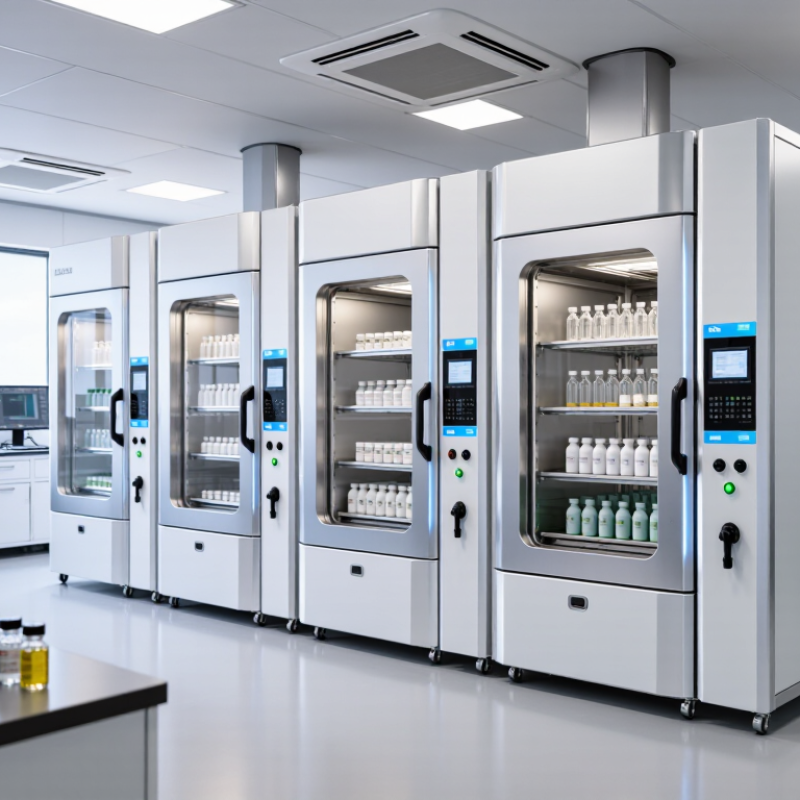
What Is the Best China Pharmaceutical Stability Chamber?

What Is a China Pharmaceutical Stability Chamber?

A China pharmaceutical stability chamber is a controlled environmental cabinet made or supplied in China for pharmaceutical testing. It maintains stable temperature and humidity while samples remain inside for weeks, months, or longer. These conditions help laboratories study shelf life, product quality, and packaging performance.

A typical chamber may control 25°C and 60% relative humidity for long-term studies. Accelerated studies often use higher temperature and humidity. The exact setting depends on the product, protocol, and applicable guidelines. Sensors measure conditions repeatedly, while alarms warn operators about temperature drift, power loss, or door openings. Small details matter. A warm corner can affect results.

Reliable evaluation requires more than a product brochure. Engineers should review temperature mapping, humidity uniformity, recovery time, calibration records, and data storage. Installation, operational, and performance qualification also deserve attention. In practice, a chamber can look impressive but still perform unevenly after loading. That is easy to miss.

The best China pharmaceutical stability chamber is not simply the cheapest or largest model. It should match the sample load, required conditions, laboratory space, and monitoring plan. Stainless steel interiors support cleaning, while insulated doors reduce unnecessary fluctuation. Backup alarms and independent data recording add practical protection. Yet no chamber removes every risk. Operators must inspect seals, verify sensors, and review trends regularly. Sometimes, the weakest part is the daily procedure, not the equipment.

Which Features Define a Reliable Stability Chamber?

What Is the Best China Pharmaceutical Stability Chamber?

Which Features Define a Reliable Stability Chamber?

A reliable stability chamber controls temperature and humidity with minimal fluctuation. This matters when samples remain inside for months. Look for precise sensors, even airflow, and independent over-temperature protection. A chamber should recover quickly after door opening. The display must show current values clearly. It should also record historical data continuously. For China-based laboratories, confirm the chamber matches local power conditions and room temperatures.

Tips: Request temperature and humidity mapping before routine use. Check sensor calibration certificates and traceability. Review alarm tests, recovery time, and data export functions. Ask whether qualified technicians can provide installation, maintenance, and replacement parts. Small details matter.

A dependable unit supports documented IQ, OQ, and PQ activities. Its software should protect records from silent changes. Remote alerts can help staff respond to failures outside working hours. Shelves should allow air circulation around every container. Avoid choosing only by chamber volume or purchase price. A larger chamber may waste energy and create uneven loading. No chamber is perfect. I would still challenge the supplier with a loaded mapping test, not an empty demonstration. Condensation, blocked airflow, and frequent door openings can reveal weaknesses. Reliable performance comes from equipment, verification, trained users, and honest maintenance records.

What Is the Best China Pharmaceutical Stability Chamber? - Which Features Define a Reliable Stability Chamber?
Evaluation Dimension Recommended Requirement or Typical Value Why It Matters Reference or Verification Method
Long-Term Stability Condition 25 ± 2 °C and 60 ± 5% relative humidity, or 30 ± 2 °C and 65 ± 5% relative humidity where applicable Supports common real-time pharmaceutical stability studies and regional climatic-zone requirements. ICH Q1A(R2); confirm that the chamber can maintain the selected setpoint continuously.
Accelerated Stability Condition 40 ± 2 °C and 75 ± 5% relative humidity Used to evaluate the effect of elevated temperature and humidity over a shorter study period. ICH Q1A(R2); verify performance under full load, not only at an empty-chamber condition.
Intermediate Stability Condition 30 ± 2 °C and 65 ± 5% relative humidity Provides an intermediate condition when significant change occurs during accelerated testing. ICH Q1A(R2); confirm humidity control and recovery after door opening.
Refrigerated Storage Range 5 ± 3 °C Suitable for products requiring controlled refrigerated storage and stability monitoring. ICH Q1A(R2); validate temperature distribution throughout the usable chamber volume.
Temperature Uniformity A documented acceptance criterion defined by the user, commonly targeted at approximately ±2 °C or better for stability applications Reduces location-dependent variation and helps ensure that samples experience comparable conditions. Perform a calibrated multi-point temperature mapping study at empty and loaded conditions.
Relative-Humidity Uniformity A documented acceptance criterion defined by the user, commonly targeted at approximately ±5% RH or better Prevents moisture-sensitive samples from receiving different humidity exposure at different shelf positions. Use calibrated humidity sensors during a complete chamber mapping study.
Setpoint Stability and Recovery Stable control after start-up and rapid, documented recovery following door opening or power restoration Limits excursions that may affect product quality or compromise study data. Review recovery-time test results and trend data under representative operating conditions.
Continuous Monitoring Continuous recording of temperature and relative humidity with configurable sampling intervals Creates an auditable record of storage conditions throughout the stability study. Check data export, time synchronization, audit trail, and retention capability.
Alarm and Notification Functions Independent high/low temperature and humidity alarms, door-open alarm, power-failure alarm, and remote notification capability Enables timely intervention before an excursion becomes a critical deviation. Challenge-test each alarm and verify local and remote notification records.
Calibration and Sensor Management Traceable calibration certificates for temperature and humidity sensors, with defined recalibration intervals Supports measurement accuracy, regulatory confidence, and investigation of deviations. Review calibration traceability, uncertainty, sensor location, and out-of-tolerance procedures.
Qualification Documentation Documented design, installation, operational, and performance qualification support Demonstrates that the chamber is installed correctly and performs consistently for its intended use. Request protocols, reports, certificates, acceptance criteria, and change-control records.
Data Integrity and Access Control User authentication, role-based access, audit trails, protected records, and secure data backup Helps ensure that electronic records are attributable, legible, contemporaneous, original, and accurate. Assess system controls against applicable electronic-record and data-integrity procedures.
Airflow and Sample Loading Forced-air circulation, adjustable shelving, and a defined loading pattern that does not block air inlets or outlets Promotes consistent environmental conditions and reduces hot or humid spots. Review airflow design and perform mapping using the intended shelf configuration and load.
Construction and Condensation Control Corrosion-resistant interior, insulated walls, sealed door gasket, safe drainage, and condensation protection Improves durability, cleanliness, temperature performance, and protection of stored samples. Inspect materials, gasket integrity, drain design, and chamber performance at high humidity.
Power-Failure Protection Automatic restart, retained settings, event logging, and connection to an appropriate emergency power system where required Reduces the risk of uncontrolled excursions during electrical interruptions. Conduct a documented power-loss and restart test under controlled conditions.
Maintenance and Serviceability Accessible sensors and filters, preventive-maintenance schedule, spare-parts availability, and qualified technical support Maintains performance over the chamber life cycle and minimizes study interruptions. Evaluate service procedures, response times, maintenance records, and total cost of ownership.

How Do Chinese Stability Chambers Meet Pharmaceutical Standards?

What Is the Best China Pharmaceutical Stability Chamber?

The best Chinese stability chamber is not judged by appearance or price. It must consistently control temperature, humidity, alarms, mapping, and data records. ICH Q1A(R2) defines common long-term conditions as 25 ± 2°C/60 ± 5% RH or 30 ± 2°C/65 ± 5% RH. Accelerated testing commonly uses 40 ± 2°C/75 ± 5% RH. These limits are demanding in real laboratories.

Chinese chambers can meet pharmaceutical standards when manufacturers follow documented qualification procedures. WHO Technical Report Series No. 1010, Annex 10, emphasizes installation, operational, and performance qualification. A compliant unit should show uniformity across shelves, calibrated sensors, recovery after door opening, and secure electronic records. Chinese Pharmacopoeia requirements may also support local testing workflows. Still, a certificate alone proves little. This is where judgment matters.

Tips: Request temperature and humidity mapping reports, not only factory specifications. Check sensor calibration traceability and alarm response records. Ask for data-export tests during a customer audit. Small details matter.

In practice, chamber performance can change after loading. A fully qualified empty chamber may behave differently with sample bottles, cartons, or frequent access. I have seen specifications look excellent, yet the recovery time remained unclear. That weakness deserves attention. Independent calibration, periodic requalification, and documented maintenance provide stronger evidence than marketing language. The most reliable choice is the chamber with transparent records and repeatable results.

What Is the Best China Pharmaceutical Stability Chamber?

ICH Q1A(R2) reference conditions commonly used for pharmaceutical stability studies

The best stability chamber is one that can maintain the required temperature and relative humidity conditions uniformly and continuously. For room-temperature products, common ICH Q1A(R2) study conditions include long-term storage at 25°C/60% RH, intermediate storage at 30°C/65% RH, and accelerated storage at 40°C/75% RH. Regional regulations may also accept alternative long-term conditions such as 30°C/65% RH.

How Can Stability Chamber Performance Be Evaluated?

What Is the Best China Pharmaceutical Stability Chamber?

How Can Stability Chamber Performance Be Evaluated?

A reliable stability chamber should be judged by measured performance, not appearance or price. During qualification, technicians map temperature and relative humidity across the chamber’s working space. They place sensors near corners, shelves, doors, and the air return. This reveals cold spots, warm zones, and slow recovery areas. Small details matter.

Performance testing should include empty and loaded conditions. A fully loaded chamber may respond differently from an empty chamber. Technicians should record the time needed to recover after a door opening. They should also check temperature uniformity, humidity stability, alarm response, and power-failure recovery. Do not guess. Use calibrated instruments with traceable records.

Data review is equally important. The monitoring system should preserve timestamps, user actions, alarm history, and exported records without unexplained gaps. Independent calibration checks can expose sensor drift before it affects stored samples. In practical evaluations, a neat qualification report can still hide weak sampling locations or unrealistic loading patterns. That is an uncomfortable limitation. The test design should reflect daily use, including frequent access and changing sample loads. Engineers should document deviations, investigate repeated alarms, and challenge the system under controlled conditions. A chamber that performs well only under ideal conditions deserves further review.

How Should You Choose the Best China Pharmaceutical Stability Chamber?

What Is the Best China Pharmaceutical Stability Chamber?

Choosing the best China pharmaceutical stability chamber starts with your study requirements. Define temperature, humidity, capacity, and product packaging before comparing suppliers. Common conditions include 25°C/60% RH and 40°C/75% RH. However, your protocol may require different settings. A chamber should maintain stable conditions, not merely reach them. Ask for uniformity and fluctuation data from actual testing.

Review the control system carefully. It should record temperature and humidity continuously, with password protection and audit trails. Independent sensors can verify the displayed readings. Check alarm limits, door-opening recovery, power-failure protection, and remote notifications. Request calibration certificates with traceable references. Ask whether installation, IQ, OQ, and PQ support are available. Documentation matters.

Look beyond the purchase price. Inspect the factory’s quality procedures, testing records, and production experience. Confirm chamber materials, insulation, compressor performance, and shelf loading limits. Service response is important when a study runs for twelve months. Spare parts should remain available throughout the expected operating period. Export packaging and electrical compatibility also deserve attention. A video demonstration is useful, but it cannot replace a factory audit. No chamber is perfect. Even strong specifications may hide poor performance under full load. Leave room for independent mapping, repeated verification, and a careful review of small inconsistencies.

FAQS

What features define a reliable stability chamber?

It controls temperature and humidity with minimal fluctuation. Precise sensors matter. Even airflow protects samples across shelves. Independent over-temperature protection adds safety. Clear displays help staff react quickly.

Why are temperature and humidity recovery times important?

Door openings disturb internal conditions. A reliable chamber should recover quickly afterward. Technicians should record recovery time during testing. Do not rely on promises. Measure it.

What stability conditions are commonly used in pharmaceutical testing?

Common long-term conditions include 25 ± 2°C and 60 ± 5% RH. Another option is 30 ± 2°C and 65 ± 5% RH. Accelerated testing commonly uses 40 ± 2°C and 75 ± 5% RH. Actual requirements should be verified for each study.

How should chamber mapping be performed?

Place calibrated sensors near corners, shelves, doors, and the air return. Mapping should cover temperature and relative humidity. Test both empty and loaded conditions. Loaded conditions often reveal uneven airflow.

What records should the monitoring system preserve?

It should retain timestamps, alarm history, user actions, and exported data. Records should not change silently. Unexplained gaps deserve investigation. Data protection is not a minor feature.

How can a chamber’s alarms and power-failure response be evaluated?

Technicians should test alarm activation and response times. They should also examine recovery after power failure. Remote alerts can notify staff outside working hours. Test the alerts, rather than assuming they work.

What qualifications and documents should be requested?

Request installation, operational, and performance qualification documents. Ask for mapping reports and sensor calibration certificates. Calibration should have traceable records. Maintenance history should be transparent. A certificate alone proves little.

Should buyers choose a chamber by volume or purchase price?

No. A larger chamber may waste energy or create uneven loading. Shelves should leave space around every container. Purchase price cannot show long-term reliability. I would challenge the supplier with a loaded mapping test.

What weaknesses can appear during real laboratory use?

Condensation, blocked airflow, and frequent door openings may expose weaknesses. Sample bottles and cartons can change performance. A neat report may still use unrealistic loading patterns. That limitation deserves honest review.

How can long-term performance be maintained?

Use periodic requalification and independent calibration checks. Investigate repeated alarms and document deviations. Train users to load shelves correctly. No chamber is perfect. Honest maintenance records still matter.

Conclusion

A Pharmaceutical Stability Chamber is a controlled testing system designed to maintain precise temperature and humidity conditions for evaluating how medicines, active ingredients, and packaging materials change over time. A reliable chamber should provide uniform environmental conditions, accurate sensors, dependable control systems, secure data recording, and alarms that respond quickly to abnormal changes. Its interior should also be easy to clean and suitable for organized sample storage.

Chinese stability chambers can support pharmaceutical testing when they are designed and verified according to recognized quality and validation principles. Their performance should be evaluated through temperature and humidity mapping, calibration checks, recovery testing after door openings, long-term operating stability, and data integrity reviews. When choosing the best China Pharmaceutical Stability Chamber, users should consider the required test conditions, chamber capacity, control accuracy, energy efficiency, maintenance support, documentation, validation services, and overall operating cost. The best choice is the model that consistently meets the intended testing requirements and provides dependable performance throughout its service life.


Amelia

Amelia

Amelia is a seasoned marketing professional with a wealth of expertise in our company’s core offerings. With an unwavering passion for driving growth and innovation, she plays a pivotal role in shaping our marketing strategies and enhancing brand visibility. A key aspect of her responsibilities......