What Is a Drop Test Machine and How Does It Work?

Time:2026-10-22 Author:Amelia
0%

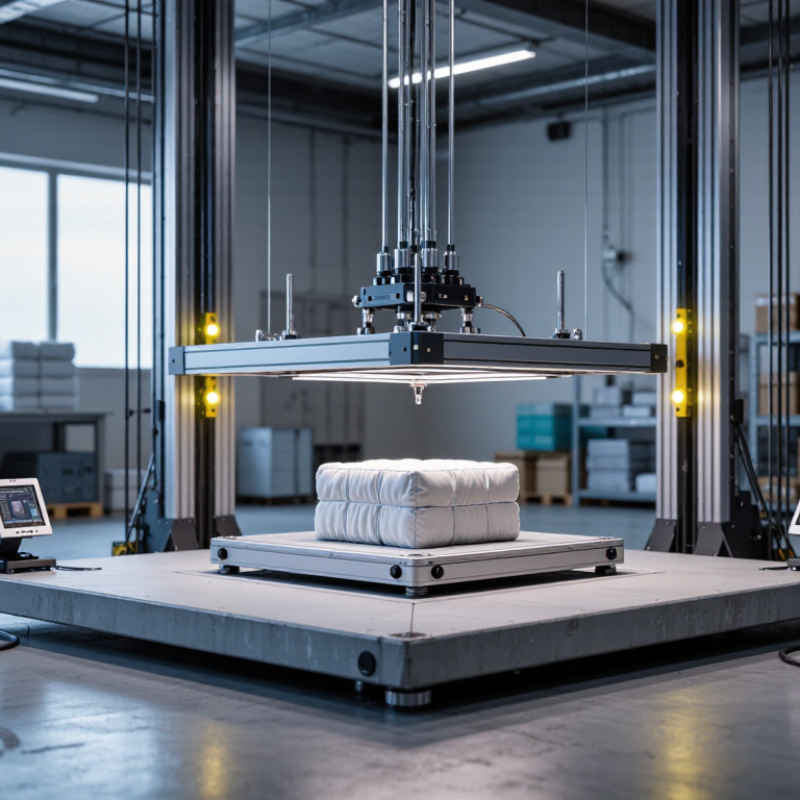
A Drop Test Machine is a controlled system used to examine how products and packages survive sudden impact. It releases a test sample from a defined height onto a selected surface. The resulting damage can reveal weak corners, poor cushioning, loose closures, or unstable internal components. In a warehouse or laboratory, one short drop may expose a failure that ordinary inspection misses.

Packaging engineer Walter Soroka emphasized, “Packaging must protect the product from the hazards of distribution.” This principle explains why drop testing matters. A modern Drop Test Machine usually includes a lifting platform, release mechanism, adjustable height controls, and a rigid impact base. Some models also use sensors, cameras, or software to record impact conditions. Operators can test faces, edges, and corners with greater consistency than manual handling allows.

The process looks simple. It is not always simple. Product weight, center of gravity, packaging material, drop orientation, and floor hardness can change the result. Even a small setup error may distort the conclusion. That limitation deserves attention.

A reliable test begins with a clear purpose. Is the goal package development, quality verification, or shipping-risk assessment? The answer determines the sample size and test method. Standards such as ASTM and ISO can guide the procedure, but they cannot replace practical judgment. A Drop Test Machine provides evidence, not certainty. Real distribution involves vibration, temperature changes, stacking pressure, and careless handling. This article explains the machine’s structure, operating sequence, test variables, and common interpretation mistakes.
What Is a Drop Test Machine and How Does It Work?

What Is a Drop Test Machine?

A drop test machine is a controlled device that measures how packaging and products respond to sudden impact. It typically includes a rigid base, lifting carriage, release mechanism, impact surface, and height controls. Some advanced systems also record acceleration, force, and product movement through sensors.

The test begins with a packaged product secured at a defined height. The carriage releases it without pushing or tilting. It then strikes the surface at a selected orientation, such as a corner, edge, or face. Technicians inspect broken parts, loose components, leaks, and internal damage. ASTM D5276 provides a recognized method for free-fall testing of loaded containers.

The need is growing. The U.S. Census Bureau reported about $1.12 trillion in U.S. retail e-commerce sales during 2023, representing 15.4% of total retail sales. More shipped products mean more handling impacts. The World Bank’s What a Waste 2.0 report estimates 2.01 billion tonnes of municipal solid waste are generated globally each year, with about 33% not managed safely. Better packaging tests can reduce avoidable damage and waste.

A machine is not a perfect judge. Results can change with humidity, package orientation, test speed, and operator setup. Calibration matters. Real distribution also includes vibration, compression, and repeated impacts, so one drop test should not stand alone. Careful engineers combine machine results with field evidence and documented procedures.

What Is a Drop Test Machine and How Does It Work?

A drop test machine releases a product or package from a controlled height to evaluate impact resistance. The chart shows the theoretical impact velocity and gravitational potential energy for a 5 kg test mass at common drop heights, calculated using standard free-fall equations.

Values assume ideal free fall with gravitational acceleration of 9.81 m/s² and no air resistance. Actual test results can vary because of surface compliance, package geometry, and impact orientation.

What Components Make Up a Drop Test Machine?

What Is a Drop Test Machine and How Does It Work?

A drop test machine contains several parts that work together to measure packaging and product durability. Its rigid frame supports the entire system and reduces unwanted movement during testing. Guide columns keep the lifting platform aligned as it rises and falls. The drop carriage holds the test sample at a controlled height. A release mechanism then lets it go without adding extra force. That detail matters. A small release error can change the impact result.

The impact table receives the falling sample and transfers the force into the test structure. Many machines include adjustable platforms, protective enclosures, and control panels for safer operation. Sensors can record height, acceleration, impact time, and repeated drops.

A data acquisition system stores these readings for later analysis. In real testing environments, technicians also inspect the table and release system before each sequence. Dust, loose fasteners, or an uneven sample can affect repeatability. No setup is perfect. Human judgment still matters.

Tips:

Check the drop height with a calibrated measure. Secure the sample without over-tightening it. Keep hands outside the test area. Run a trial drop when the sample shape is unusual. Record visible damage immediately, even if it seems minor. Small cracks often become important evidence during packaging improvements.

How Does a Drop Test Machine Perform a Test?

What Is a Drop Test Machine and How Does It Work?

How Does a Drop Test Machine Perform a Test?

A drop test machine simulates the shocks a packaged product may experience during handling, transport, or delivery. The operator places the prepared package on a platform, selects a release height, and records the impact response. The platform then opens or moves away, allowing the package to fall freely onto a rigid surface.

Testing usually follows a defined sequence. ASTM D5276 describes free-fall drop testing for shipping containers, while ISTA 3A uses package weight to determine representative drop heights. For example, ISTA 3A commonly specifies drops from 30 inches for packages under 21 pounds. Heavier packages use lower heights, reducing unnecessary test risk. Engineers often inspect corners, edges, seals, cushioning, and product function after every impact.

Sensors can measure acceleration, shock duration, and package movement. High-speed cameras may reveal twisting that ordinary inspection misses. The tester should also condition samples before testing, because temperature and humidity can change material strength. One clean pass can mislead. Real parcels rarely land perfectly. A practical evaluation may require several samples, different orientations, and repeated drops.

In my experience, the most useful result is not a simple pass or fail. It is a clear record of where damage begins, how protection changes, and whether the package still works afterward. Test results should be compared with the relevant ASTM or ISTA procedure and documented carefully. A weak record can make a reliable machine produce an unreliable conclusion.

Which Variables Affect Drop Test Results?

What Is a Drop Test Machine and How Does It Work?

Which Variables Affect Drop Test Results?

A drop test machine releases a packaged product from a controlled height. It records impact performance under repeatable conditions. The platform may use an electromagnetic release, guided carriage, or pneumatic lift. ASTM D5276 and ISO 2248 describe key practices for free-fall impact testing. These standards stress consistent orientation, height, and surface conditions.

The drop height strongly affects impact energy. A 10-kilogram carton dropped from 0.8 metres reaches nearly 4 metres per second before impact. Product mass matters too. Heavier packages generate greater energy at the same height. Cushion thickness, material stiffness, and internal clearance also change the result. Even a small gap can let a product strike the carton wall directly.

Packaging professionals should control humidity, temperature, and conditioning time. Paper-based materials can weaken after absorbing moisture. ASTM D4332 recommends conditioning packages before testing when the distribution environment requires it. Test sequence matters as well. A corner drop may create damage that changes later edge and face impacts. ISTA procedures therefore define orientations and handling sequences for specific distribution profiles.

A clean result can still mislead.

I have seen tests fail because operators measured from the wrong reference point. The intended height was correct, but the package’s lowest edge was not. That small error changed impact speed and damaged the comparison. Results should include package mass, dimensions, drop orientation, conditioning data, and machine settings. Without those details, repeatability becomes an assumption, not evidence.

Where Are Drop Test Machines Used?

Drop test machines are used wherever products may be dropped during handling, shipping, or daily use. Packaging laboratories use them to test cartons, crates, foam inserts, and protective corners. A controlled drop can reveal crushed edges, broken seals, or movement inside the package. These details are difficult to judge through visual inspection alone.

Manufacturers also use drop test machines for electronics, household appliances, tools, furniture parts, and automotive components. Engineers place a product or packaged unit on a platform, set the drop height, and release it onto a hard surface. They then inspect the product, packaging, and recorded impact data. In many facilities, repeated drops are performed from different angles. That evidence matters.

Logistics companies use these machines to study risks in warehouses and delivery networks. Research laboratories may compare materials, closure methods, or internal cushioning designs. Medical equipment producers can examine whether protective packaging keeps sensitive devices secure during transport. Results should be reviewed by trained technicians, with calibrated equipment and consistent test conditions.

Real shipments are rarely perfect. A box may land on a corner, meet moisture, or carry an uneven load. One laboratory drop cannot reproduce every event. The floor changes everything. For this reason, experienced teams combine machine results with field observations and careful product inspection. Sometimes, a failed test exposes a weak package rather than a weak product. That distinction deserves attention before any design decision is made.

What Is a Drop Test Machine and How Does It Work? - Where Are Drop Test Machines Used?

Data Dimension Description or Typical Data How It Relates to Drop Testing
Definition A drop test machine is laboratory equipment that releases a product or package from a controlled height to evaluate its resistance to impact. It provides repeatable impact conditions for comparing package designs, materials, and product protection methods.
Basic Working Principle The specimen is secured at a preset height, the gripping mechanism releases it, and the specimen lands on a rigid impact surface. The controlled release minimizes operator influence and helps produce consistent test results.
Main Test Variables Drop height, impact orientation, specimen mass, number of drops, conditioning, and impact surface. Changing any of these variables can significantly affect the impact energy and test outcome.
Typical Drop Height Approximately 300–1,500 mm for many laboratory package tests; the exact height depends on the applicable procedure. Higher drop heights generally create greater impact severity, but the selected value must follow the test plan or standard.
Impact Energy The approximate impact energy is calculated using the formula E = mgh, where m is mass, g is gravitational acceleration, and h is drop height. A heavier specimen or greater drop height increases the energy transferred during impact.
Release Mechanism Common systems include electromagnetic, pneumatic, motorized, or mechanical release mechanisms. A reliable release mechanism helps prevent additional horizontal motion and improves repeatability.
Impact Surface Usually a level, rigid steel or concrete-backed surface designed to withstand repeated impacts. The surface should remain stable and sufficiently rigid so that it does not absorb a significant amount of impact energy.
Test Orientations Flat-face, edge, corner, and specified orientation drops. Different orientations reveal weaknesses in packaging seams, corners, closures, handles, and internal cushioning.
Specimen Types Shipping cartons, corrugated boxes, plastic containers, cases, bags, bottles, electronic products, and protective packaging systems. The machine can evaluate either the packaging alone or the complete packaged product.
Typical Load Capacity Many laboratory machines accommodate loads from approximately 60 kg to 100 kg, while heavy-duty systems may support more. The selected capacity must exceed the combined mass of the product, packaging, and any fixture used.
Common Evaluation Criteria Visible damage, product functionality, leakage, loss of closure, deformation, broken components, and package integrity. The acceptance criteria should be defined before testing so that results can be judged objectively.
Relevant Test Standards Examples include ISO 2248 for vertical impact testing of complete, filled transport packages and ASTM D5276 for free-fall drop testing of loaded containers. Standards define test preparation, conditioning, drop sequence, orientation, and reporting requirements.
Packaging Development Used during package design, material selection, prototype validation, and design comparison. Testing helps engineers reduce damage rates while balancing protection, material usage, size, and cost.
Transportation and Logistics Used to simulate accidental drops that may occur during handling, loading, unloading, and distribution. Results support packaging decisions for parcel delivery, palletized shipments, and general freight operations.
Consumer Electronics Applied to packaged phones, computers, appliances, displays, accessories, and other electronic products. The test checks whether the packaging protects sensitive components and whether the product remains functional after impact.
Automotive Components Used for packaged parts, assemblies, sensors, lighting components, and service replacement items. Testing helps verify that protective packaging limits impact damage during shipment and warehouse handling.
Food, Beverage, and Consumer Goods Applied to bottles, jars, cans, cartons, household products, and multipacks. The test can identify cracking, leakage, seal failure, crushing, and loss of product protection.
Pharmaceutical and Medical Products Used for packaged medicines, diagnostic devices, laboratory supplies, and medical equipment. Testing helps verify container integrity and protection of products that may be sensitive to shock or breakage.
Quality Control and Incoming Inspection Used for routine production checks, supplier qualification, and verification of packaging changes. Regular testing can identify variations in materials, assembly methods, and packaging performance.
Key Advantages Repeatable height control, defined impact orientation, improved safety, reduced operator variation, and documented results. These features make machine testing more consistent than manually dropping samples.
Important Limitations A laboratory drop test does not reproduce every transportation hazard, such as vibration, compression, humidity, temperature changes, or repeated impacts. For a complete distribution assessment, drop testing is often combined with other applicable package performance tests.

FAQS

What are the main components of a drop test machine?

A rigid frame supports the system and limits unwanted movement. Guide columns keep the lifting platform aligned. The carriage holds the package at a chosen height. A release mechanism drops it without extra force. The impact table receives the falling package. Sensors, controls, and data storage complete the setup.

How does a drop test machine perform a test?

The operator places a prepared package on the platform. They select a drop height and secure the sample carefully. The platform moves away, allowing a free fall. The package strikes a rigid table. The operator then checks damage and product function.

Why is the release mechanism important?

It should release the package without pushing or twisting it. A small release error can change the impact result. This detail is easy to underestimate. A trial drop may help reveal unusual movement.

What measurements can the machine record?

Sensors may record height, acceleration, impact time, and package movement. A data system stores the readings for later review. A high-speed camera can show twisting during impact. Ordinary inspection may miss that motion.

How should the drop height be selected?

The height should match the test procedure and package weight. Lighter packages may use higher drops, while heavier packages often use lower heights. Always verify the height with a calibrated measuring tool. Guessing is not reliable.

What should technicians inspect before testing?

Check the impact table, release system, guide columns, and fasteners. Remove dust and confirm that the sample sits evenly. Keep hands outside the test area. Loose parts can reduce repeatability.

Why should samples be conditioned before testing?

Temperature and humidity can change packaging strength. Conditioning creates a more realistic test environment. Test results may differ between a dry warehouse and a humid loading area. One condition cannot represent every shipment.

What should be checked after each drop?

Inspect corners, edges, seals, cushioning, and visible cracks. Check whether the product still operates normally. Record minor damage immediately. Small cracks can become important evidence later. A simple pass or fail may hide useful details.

Conclusion

A Drop Test Machine is a controlled testing system used to evaluate how products and packages withstand sudden impact. It helps engineers identify weaknesses in product structure, protective materials, and packaging design before items are transported or placed on the market. A typical machine includes a sturdy frame, lifting and release mechanism, adjustable drop platform, impact surface, height controls, and optional sensors or recording equipment. These components work together to create repeatable test conditions and provide reliable observations.

During a test, the sample is positioned at a selected height and released without additional force, allowing it to fall onto a specified surface. After impact, testers inspect the product for cracks, deformation, broken parts, loss of function, or damage to the packaging. Results can be influenced by factors such as drop height, sample weight, orientation, impact surface, temperature, packaging condition, and the number of drops. Drop Test Machines are commonly used in packaging development, electronics, household goods, industrial equipment, and quality-control laboratories to improve durability, reduce transportation damage, and support consistent product evaluation.


Amelia

Amelia

Amelia is a seasoned marketing professional with a wealth of expertise in our company’s core offerings. With an unwavering passion for driving growth and innovation, she plays a pivotal role in shaping our marketing strategies and enhancing brand visibility. A key aspect of her responsibilities......