China Top 10 Dust Test Chamber Manufacturers

Time:2026-09-21 Author:Charlotte
0%

China Top 10 Dust Test Chamber Manufacturers introduces leading Chinese suppliers serving automotive, electronics, aerospace, and outdoor equipment testing. These manufacturers differ in chamber volume, dust circulation design, sealing performance, control software, and after-sales support. A polished website does not prove technical capability. Test records matter more.

A reliable Dust Test Chamber should support recognized methods, including IEC 60529, IEC 60068-2-68, and MIL-STD-810H Method 510.7, where applicable. Buyers should examine dust concentration stability, airflow uniformity, temperature control, pressure protection, and cleaning access. Small details matter. Fine powder can settle inside door seals. A weak hinge may distort after repeated loading. A poorly positioned sensor can produce misleading results.

W. Edwards Deming, a respected quality-management authority, stated, “Quality comes not from inspection, but from the improvement of the production process.” This principle applies directly to dust testing. A capable manufacturer improves chamber design, calibration procedures, operator training, and maintenance support before problems reach the final report. The top ten list therefore considers more than price or production capacity. It reviews manufacturing experience, engineering documentation, customization ability, certification support, and customer feedback.

However, no ranking is permanent. Supplier performance may change with new projects, staff turnover, or component availability. Some manufacturers communicate strongly but provide limited evidence. Others appear less visible while delivering dependable equipment. This guide encourages careful comparison, factory verification, and application-based testing before purchase. The best choice is not always the largest supplier. It is the manufacturer whose Dust Test Chamber can produce repeatable, defensible results under real operating conditions.
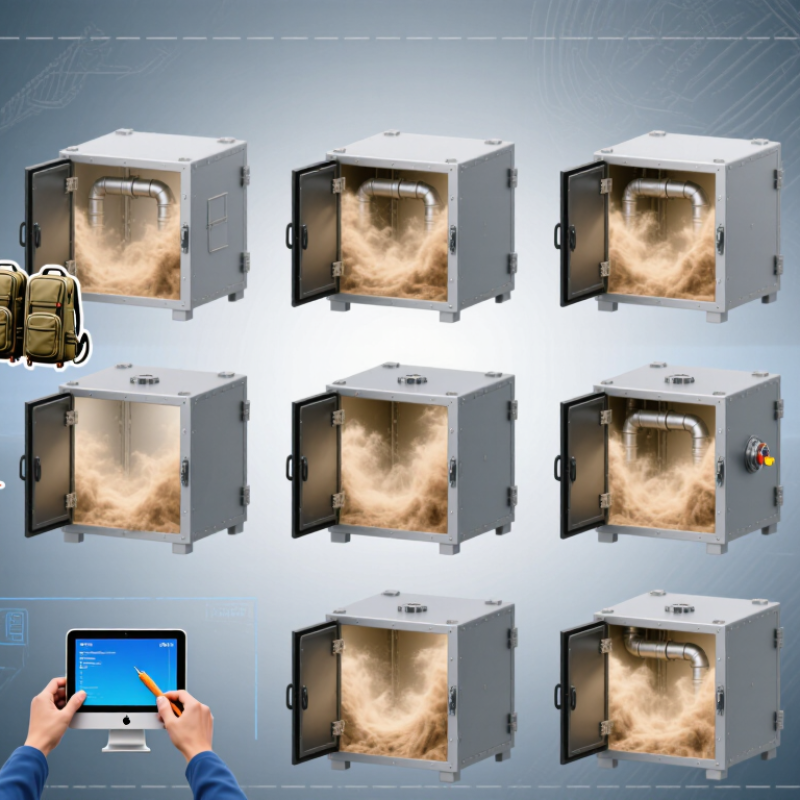
China Top 10 Dust Test Chamber Manufacturers

What Is a Dust Test Chamber and How Does It Work?

A dust test chamber is a controlled laboratory enclosure used to examine how fine particles enter and affect equipment. It helps engineers evaluate sealed housings, connectors, switches, sensors, and other components used in dusty environments. The test may support ingress protection assessments under standards such as IEC 60529, depending on the selected procedure.

Inside the chamber, a measured quantity of standardized dust circulates around the specimen. A fan creates a steady cloud, while the chamber maintains defined exposure conditions. Some procedures also apply reduced pressure inside the test item, encouraging particles to pass through weak seals. Technicians then inspect the enclosure and check whether dust reached sensitive parts. Small details matter. A poorly closed cable gland can change the result.

Reliable testing requires more than a metal box and a fan. The dust concentration, airflow, test duration, specimen position, and chamber cleanliness must remain controlled. Operators should verify sensors and review calibration records before each test. Fine powder can settle in corners, so careless cleaning may affect repeatability. A chamber can look ready and still produce questionable data. That is an uncomfortable point, but it deserves attention. Test reports should record the dust type, specimen condition, pressure settings, observations, and any unusual event. Clear records make the result easier to verify and repeat.

Key Criteria for Evaluating Chinese Dust Test Chamber Manufacturers

China Top 10 Dust Test Chamber Manufacturers

When evaluating Chinese dust test chamber manufacturers, look beyond product rankings and attractive specifications. The right supplier should explain test volume, dust circulation, pressure control, temperature range, and humidity limits clearly. Ask which standards the chamber supports, such as IEC 60529, and whether it handles IP5X or IP6X testing. A polished brochure is not proof. Request recent test reports, calibration records, and internal quality procedures. During a factory visit, inspect door seals, viewing windows, grounding points, filters, and the dust recovery tray. Small details often reveal production discipline.

Technical experience matters when a chamber must deliver repeatable results. The manufacturer should provide sensor accuracy, airflow uniformity, test duration control, and calibration traceability. Ask for raw data, alarm logs, and photographs from a sample validation test. The control system should support secure data export and clearly record deviations. If a supplier promises perfect performance, be cautious. Real engineering includes limits, maintenance needs, and occasional adjustments. Some explanations may remain incomplete, and that deserves closer review.

Reliability also depends on technicians, spare parts, installation guidance, and response time after delivery. Check whether the supplier performs factory acceptance testing and supports site acceptance testing. Review warranty terms in plain language. Confirm replacement timelines for seals, fans, filters, and sensors. In practical evaluations, low purchase prices can hide costly downtime. I once overlooked service response speed; the specification looked excellent, but scheduling support was difficult. That mistake still influences how I compare manufacturers today.

China’s Top 10 Dust Test Chamber Manufacturers

China’s Top 10 Dust Test Chamber Manufacturers

China’s top 10 dust test chamber manufacturers are often judged by engineering depth, testing accuracy, and service reliability. A strong manufacturer should provide chambers for dust ingress, circulation, sealing, and protection testing. Important details include adjustable airflow, stable temperature control, visible observation windows, and easy sample access.

Technical experience matters. Manufacturers should explain dust concentration, particle size, test duration, and enclosure protection requirements clearly. They should also provide calibration records and operating instructions. In practice, a chamber with poor sealing can create unstable results. That issue may appear small, but it can affect product decisions. A ranking is never perfect. Buyer needs differ between electronics, lighting, automotive parts, and outdoor equipment.

Tips: Ask for a complete specification sheet before requesting a quotation. Check the chamber’s internal dimensions, dust recovery system, controller accuracy, and electrical requirements. Request test data from similar projects, not only attractive photographs. Confirm installation training and spare-part support. Also inspect the powder collection area. It should be easy to clean and should not leave hidden residue. Small details matter. When comparing China’s top 10 manufacturers, consider documented experience, inspection procedures, response time, and after-sales support together. A lower price may seem practical, but weak calibration support can create higher costs later.

Comparing Product Features, Standards, and Service Capabilities

China Top 10 Dust Test Chamber Manufacturers: Comparing Product Features, Standards, and Service Capabilities

China’s top ten dust test chamber manufacturers differ most in control accuracy, chamber design, and technical support. Strong models provide programmable dust circulation, adjustable airflow, pressure control, and sealed viewing windows. Some systems support IP5X and IP6X testing, while others focus on component-level research. A clear chamber interior helps technicians observe powder movement and sample placement. Useful details include stainless-steel surfaces, quick-clean access, safety interlocks, and automatic cycle recording.

Standards matter more than attractive specifications. Buyers should check compatibility with IEC 60529, IEC 60068-2-68, ISO 20653, and applicable Chinese standards. The test method should define dust type, concentration, exposure time, airflow, and pressure conditions. Calibration records should identify instruments, uncertainty, and traceability. This is where comparisons become difficult. Some published data lack test conditions. A claimed accuracy figure means little without a measurement method.

Service capability often separates a reliable supplier from a low-cost option. Look for installation guidance, operator training, factory acceptance testing, and prompt spare-parts support. Remote diagnosis can reduce downtime, but it cannot replace skilled onsite service. Ask how technicians handle uneven dust circulation or failed door seals. Request sample reports and maintenance schedules. A polished brochure is not evidence. I would also inspect a working chamber, because photographs rarely reveal cleaning effort, noise, or powder leakage. Even experienced buyers can overlook these practical issues.

How to Select the Right Chinese Dust Test Chamber Manufacturer

How to Select the Right Chinese Dust Test Chamber Manufacturer

Choosing a Chinese dust test chamber manufacturer requires more than comparing prices. Start with the required dust type, particle size, test method, chamber volume, and operating temperature. A capable manufacturer should explain how its equipment matches recognized testing standards. Ask for technical drawings, airflow data, material details, and calibration records. Clear answers usually reveal real engineering experience.

Inspect the factory’s quality process before signing an order. Check whether critical parts are traceable and whether each chamber receives documented performance testing. Request sample reports from similar projects, but verify their details. A polished brochure is not proof. Even experienced buyers sometimes overlook after-sales support, especially when installation occurs overseas. Confirm response times, spare-part availability, remote troubleshooting, and technician training. Customization can be useful, but unnecessary changes may increase risks and maintenance costs.

Tips: Compare at least three quotations using the same specifications. Confirm the dust circulation system, sealing structure, safety controls, and power requirements. Ask how uniform dust concentration is measured inside the chamber. Visit the production site if possible. If a supplier avoids technical questions, pause the purchase. The cheapest option may become expensive after delivery. Also, leave room for honest review; your first specification may be incomplete.

FAQS

What is a dust test chamber used for?

It examines how fine particles enter equipment and affect sensitive components.

How does a dust test chamber create exposure conditions?

A fan circulates a measured quantity of standardized dust around the specimen.

Why is reduced pressure sometimes used during testing?

Reduced pressure inside the specimen can encourage particles through weak seals.

Which details can change a dust test result?

A poorly closed cable gland can allow unexpected dust entry.

What should technicians check before starting a test?

They should verify sensors and review current calibration records.

What information should appear in a dust test report?

The report should identify the dust type, specimen condition, test duration, and pressure settings.

How can a buyer evaluate a dust test chamber manufacturer?

Request technical drawings, airflow data, material details, and calibration records.

What specifications should be compared between quotations?

Compare internal dimensions, dust circulation, recovery, controller accuracy, sealing, and power requirements.

Why are installation and after-sales services important?

Overseas installation may require training, remote troubleshooting, and spare-part support.

Can the lowest-priced chamber be the best choice?

Not always. Weak calibration support may create higher costs later.

Conclusion

A Dust Test Chamber is a controlled laboratory device used to evaluate how well products, components, and enclosures resist the penetration and accumulation of airborne particles. By circulating standardized dust under defined conditions, it helps engineers assess sealing performance, reliability, durability, and compliance with relevant testing requirements. This article explains the chamber’s operating principles and introduces the key factors for evaluating manufacturers in China, including technical design, temperature and airflow control, material quality, customization capabilities, testing accuracy, safety features, production experience, and after-sales support.

It also presents a practical overview of ten leading categories of Chinese Dust Test Chamber manufacturers without focusing on brand names, comparing their product configurations, applicable standards, service capabilities, delivery processes, and maintenance support. Finally, the article offers guidance for selecting a suitable supplier by matching chamber size, dust type, test method, control system, budget, certification needs, installation conditions, and long-term service expectations.

Charlotte

Charlotte

Charlotte is a seasoned marketing professional with a deep understanding of the company's portfolio and a passion for elevating its presence in the market. With a keen eye for detail and a commitment to excellence, she ensures that our professional blog is regularly updated with insightful articles......