Choosing a UV Aging Test Chamber is not simply a matter of comparing lamp types, chamber sizes, or attractive specifications. The right equipment must reproduce the outdoor stresses that matter to your product, including ultraviolet radiation, condensation, temperature, and moisture. A plastic panel may fade under one exposure cycle, while a coating may crack only after repeated wetting and drying. Small differences in test settings can change the result.
Weathering expert Dr. George Wypych has emphasized a practical principle: “The best accelerated weathering test is the one that reproduces real failure modes.” That idea should guide every purchase decision. A chamber that creates damage quickly is not automatically reliable. It may produce unrealistic results.
This 2026 Best UV Aging Test Chamber Buying Guide examines the details that are easy to overlook. These include spectral distribution, irradiance control, black-panel temperature, water quality, specimen capacity, calibration procedures, and software records. It also considers ASTM G154 and ISO 4892-3 requirements, while recognizing that compliance alone cannot guarantee useful data. Look beyond the brochure.
A dependable chamber should provide stable operation, repeatable exposure cycles, accessible maintenance, and responsive technical support. Check the lamp replacement process. Inspect the water circulation design. Ask how calibration is verified.
No chamber fits every application. That is the difficult part.
Automotive coatings, polymers, textiles, inks, and sealants may require different cycles and evaluation methods. This guide helps buyers connect those material needs with practical equipment choices. Some recommendations remain judgment calls, because laboratory acceleration can never perfectly copy every outdoor environment.
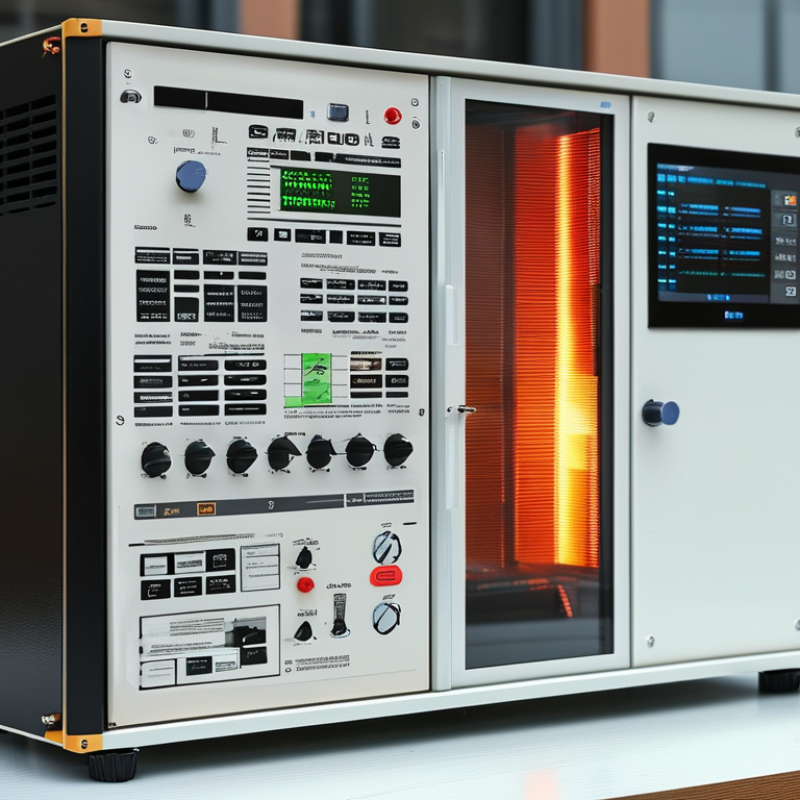
A UV aging test chamber is an environmental device used to study how materials change under ultraviolet radiation, heat, and moisture. It helps estimate fading, cracking, chalking, gloss loss, and surface embrittlement. Typical samples include coatings, plastics, rubber, textiles, and outdoor construction materials.
Inside the chamber, fluorescent UV lamps reproduce selected portions of sunlight. UVA lamps support realistic outdoor exposure, while UVB lamps create faster, harsher stress. The test area may also include condensation or water-spray systems. A programmed cycle can expose specimens to UV light at 60°C, followed by moisture at a lower temperature. This repeated pattern imitates sunlight, dew, rain, and drying.
Reliable testing depends on more than lamp power. Operators should check irradiance, chamber temperature, humidity, and black-panel temperature with calibrated instruments. Specimen spacing matters because blocked surfaces receive less radiation. In practice, small placement errors can affect results. That detail is easy to overlook.
A useful buying decision starts with the material and its real service environment. Ask whether the chamber supports the required lamp type, exposure cycle, sample size, and data recording. Standards such as ISO 4892-3 or ASTM G154 may guide the method, but they do not replace technical judgment. No chamber perfectly predicts outdoor life. Results still need careful comparison with field exposure, especially when pigments, additives, or complex surface finishes are involved.
Key technical specifications, operating conditions, and purchasing criteria for selecting a UV aging test chamber
| Evaluation Dimension | Typical Specification or Reference Value | What It Means | Buying Consideration |
|---|---|---|---|
| Test Principle | Accelerated exposure to ultraviolet radiation, controlled temperature, and optional condensation or water spray | Simulates outdoor weathering effects such as color change, chalking, cracking, gloss loss, and surface deterioration. | Choose a chamber that can reproduce the exposure cycle required for the target material and applicable test method. |
| Applicable Standards | Common references include ASTM G154, ISO 4892-3, and related industry-specific methods | Standards define lamp type, irradiance, temperature, exposure duration, condensation, and spray conditions. | Confirm that the chamber supports the exact edition and procedure required by your laboratory or customer specification. |
| Lamp Type | UVA-340, UVA-351, or UVB-313 fluorescent ultraviolet lamps | Different lamps provide different spectral distributions and are suitable for different weathering objectives. | UVA-340 is commonly selected for realistic sunlight simulation in the critical UV range; UVB-313 is generally more severe and should be used when the method specifies it. |
| UVA-340 Wavelength Range | Approximately 295–365 nm, with a spectrum designed to approximate the short-wave ultraviolet portion of sunlight | Useful for evaluating many coatings, plastics, textiles, adhesives, and automotive materials under accelerated outdoor exposure. | Verify that the chamber uses the lamp spectrum required by the selected test method rather than choosing only by lamp name. |
| UV Irradiance Control | Common controlled setpoints include approximately 0. ks? | Stable irradiance improves repeatability and helps compensate for lamp aging. | Look for closed-loop irradiance control, calibrated sensors, and a documented calibration procedure. |
| Typical ASTM G154 Irradiance | Examples include 0.89 W/m²/nm at 340 nm for UVA-340 exposure, depending on the selected cycle | Irradiance affects the rate and severity of accelerated UV exposure. | The correct value must follow the applicable test cycle; higher irradiance is not automatically more scientifically valid. |
| Black Panel Temperature | Common programmed levels are approximately 50°C, 60°C, or 70°C, depending on the method | Represents the temperature reached by a dark exposed surface and influences degradation reactions. | Confirm whether the method requires black-panel temperature or black-standard temperature control. |
| Chamber Air Temperature | Often controlled within a moderate laboratory range, commonly about 40–60°C during UV exposure | Maintains consistent thermal conditions around the specimens. | Check temperature uniformity, sensor location, calibration traceability, and recovery time after door opening. |
| Condensation Function | Typically uses heated water to create condensation on the specimen surface during a dark cycle | Replicates prolonged moisture exposure and can reveal degradation mechanisms not produced by UV alone. | Inspect the water reservoir, drain design, water-level monitoring, and cleaning access. |
| Water Spray Function | Optional programmed spray cycle using controlled nozzles and a clean-water supply | Simulates rain or thermal shock and can accelerate coating failure, blistering, and surface erosion. | Choose spray capability only when required by the test method; verify nozzle coverage and spray uniformity. |
| Exposure Cycle Programming | Programmable UV, condensation, spray, temperature, irradiance, and cycle-time stages | Allows the chamber to reproduce standardized or customized weathering sequences. | Prioritize independent stage control, recipe storage, password protection, alarms, and exportable test records. |
| Lamp Replacement | Fluorescent UV lamps require periodic replacement because output and spectrum change with operating age | Worn lamps can produce inaccurate exposure results even when the chamber temperature appears normal. | Check lamp-life guidance, replacement access, lamp matching requirements, and whether irradiance feedback is available. |
| Specimen Mounting | Specimens are normally mounted vertically around the lamp assembly with the test surface facing the radiation source | Correct positioning helps maintain consistent distance and exposure. | Evaluate the usable exposure area, holder flexibility, specimen thickness range, and ease of repositioning. |
| Interior Materials | Corrosion-resistant metal interior with components suitable for repeated UV, heat, and moisture exposure | Protects the chamber from condensation and spray-related corrosion. | Prefer smooth, easy-to-clean surfaces and replaceable components in areas exposed to water. |
| Temperature Uniformity | Should be verified by the manufacturer or laboratory according to the applicable validation procedure | Uniform conditions reduce position-related variation between specimens. | Request mapping data or acceptance criteria rather than relying only on the controller display value. |
| Irradiance Calibration | Periodic calibration using a traceable radiometer or calibrated irradiance sensor | Confirms that the UV energy delivered to the specimens remains within the required tolerance. | Ask about calibration intervals, sensor traceability, calibration certificates, and out-of-tolerance handling. |
| Safety Features | Door interlock, UV shielding, over-temperature protection, water-level protection, leakage protection, and alarms | Reduces operator exposure and protects the equipment during abnormal conditions. | Verify that UV emission stops when the door is opened and that alarms are clearly recorded. |
| Data Recording | Digital logging of irradiance, temperature, cycle status, alarms, and test duration | Provides evidence for quality control, repeatability, and audit requirements. | Look for timestamped records, USB or network export, user access control, and tamper-resistant data storage. |
| Installation Requirements | Stable indoor laboratory location with suitable electrical power, ventilation, drainage, and clean water when spray or condensation is used | Environmental conditions can affect chamber performance and service life. | Review actual footprint, door clearance, heat dissipation, water connections, drainage, and floor loading before purchase. |
| Maintenance Requirements | Routine cleaning, lamp inspection or replacement, irradiance calibration, water-system maintenance, and seal inspection | Regular maintenance supports stable exposure conditions and reduces contamination. | Compare access to lamps, sensors, reservoirs, filters, and drains, as well as the availability of service documentation. |
| Best Use Cases | Coatings, plastics, rubber, textiles, sealants, inks, automotive components, building materials, and outdoor product surfaces | Suitable for comparative accelerated weathering studies and qualification testing when the correct method is followed. | Define the material, expected service environment, acceptance criteria, and exposure standard before selecting the chamber. |
| Key Selection Priority | Standards compliance + correct lamp spectrum + stable irradiance + validated temperature and moisture control | These factors have a greater impact on meaningful results than appearance or maximum chamber size alone. | Purchase based on documented performance, calibration support, repeatability, and lifecycle cost. |
: Check lamp spectrum, irradiance stability, temperature, humidity, condensation, and water spray control. Test uniformity across several specimen positions. Rated limits can mislead. Ask for actual performance data.
Request irradiance and temperature uniformity data from multiple chamber locations. Run a small verification test using reference materials. Record differences between the center, corners, and door area. This simple check may reveal hidden variation.
Look for guarded UV exposure, door interlocks, emergency stops, and over-temperature protection. The lamps should stop when the door opens. Electrical protection is also essential. Do not rely on lamp power alone.
Request the exact test method, edition, exposure cycle, and operating range. Avoid accepting broad claims about compliance. Confirm requirements for irradiance, condensation, temperature, and timing. Market requirements may differ.
Calibration confirms irradiance, temperature, humidity, and condensation conditions. Request traceable certificates, measurement uncertainty, and due dates. Check whether sensors can be replaced without changing test geometry. Small drift matters.
Include lamps, filters, water, electricity, calibration, software updates, and service visits. Request a five-year cost estimate. A low purchase price can hide repeated sensor repairs. The cheapest option may not stay cheap.
Check floor loading, ventilation, drainage, power supply, door clearance, and room temperature limits. Confirm local electrical requirements. Poor drainage can leave water marks around specimens. Room conditions matter too.
Ask about repair response times, spare parts, training, remote diagnostics, and warranty exclusions. Request sample service reports and written escalation contacts. A capable supplier may still communicate poorly. I once trusted vague promises too much.
Choosing the right UV Aging Test Chamber is essential for evaluating how materials, coatings, and products withstand ultraviolet radiation, heat, and moisture over time. This guide explains how the chamber recreates outdoor aging through controlled UV lamps, temperature cycles, condensation, and water exposure. It highlights key specifications such as chamber size, irradiance range, temperature control, humidity management, exposure uniformity, programming functions, and monitoring accuracy. Understanding these factors helps users compare equipment according to their test objectives and sample requirements.
The guide also outlines how to select suitable UV lamp types, exposure modes, and test conditions for different materials and applications. Attention is given to safety standards, calibration procedures, data traceability, and compliance documentation. In addition, readers will learn how to assess suppliers by reviewing equipment quality, total cost, installation requirements, training, maintenance, spare parts availability, warranty terms, and after-sales support. A careful evaluation of both technical performance and long-term service can improve testing reliability and overall investment value.

 Huanyi